Showing posts with label supply chain. Show all posts

Sunday, March 06, 2016

Warehouse Automation As A Strategic Tool For Retailing


In this blog, I mostly discuss about retailing in a marketing and/or customer relationship management prospective. But there is one key element that actually can influence most of your retail business: Supply chain and logistics. Delivering the right product at the right time at the fewest cost possible is an art company like Walmart for the brick & mortar world and Amazon on the web are thriving on.

Leclerc has recently set some new warehouses models with automatic delivery preparations.
Those kind of projects have different goals:

  • Lower the cost of the warehouse handling, whil securing fast preparation
  • Be more up to date to manage large product ranges at a lower cost
  • Be ready for the battle with the Ecommerce, that have already top of the line supply chain and warehouses.
I believe that warehouse automation, and the efficient way of managing such projects will be key to the future success of retailers.


Tuesday, January 12, 2016

Amazon Is Aquiring Former Local Post Offices To Develop Its Amazon Prime Services

This is indeed an information that went under the radar. I found out about it thanks to this article, discussing about Amazon's strategy. According to the article, "Amazon has been quietly buying up old and abandonned postal facilities in major and suburban markets". This is a key information for two reasons


1 It Empowers Amazon Prime Services
The goal of Amazon is to develop new categories, especially groceries, in order to multiply the frequency of purchases on its website. But there is an issue: small amount purchases are a bargain in terms of supply chain:
  • They are pricy, as the prices of the goods is relatively high compared to the cost of delivery
  • It also implies to find a solution to the "last mile", the most difficult one.
By buying such small facilities, in local area, it helps Amazon to have a more flexible supply chain.

2 Post Offices Are Struggling
Due to the lower amount of mails, post offices' business modells need to change. The operational costs are very high, which explains the reason why post offices tend to sell some of its offices. Therefore it is a clear opportunity for Amazon, as they can get the space for not much money...
Moreover, the fact to be able to have high value delivery (compared to simple mails) allow them to be more cost efficient than the postal offices. Which gives even more power to this news.

New innovative ways to deliver goods in urban cities
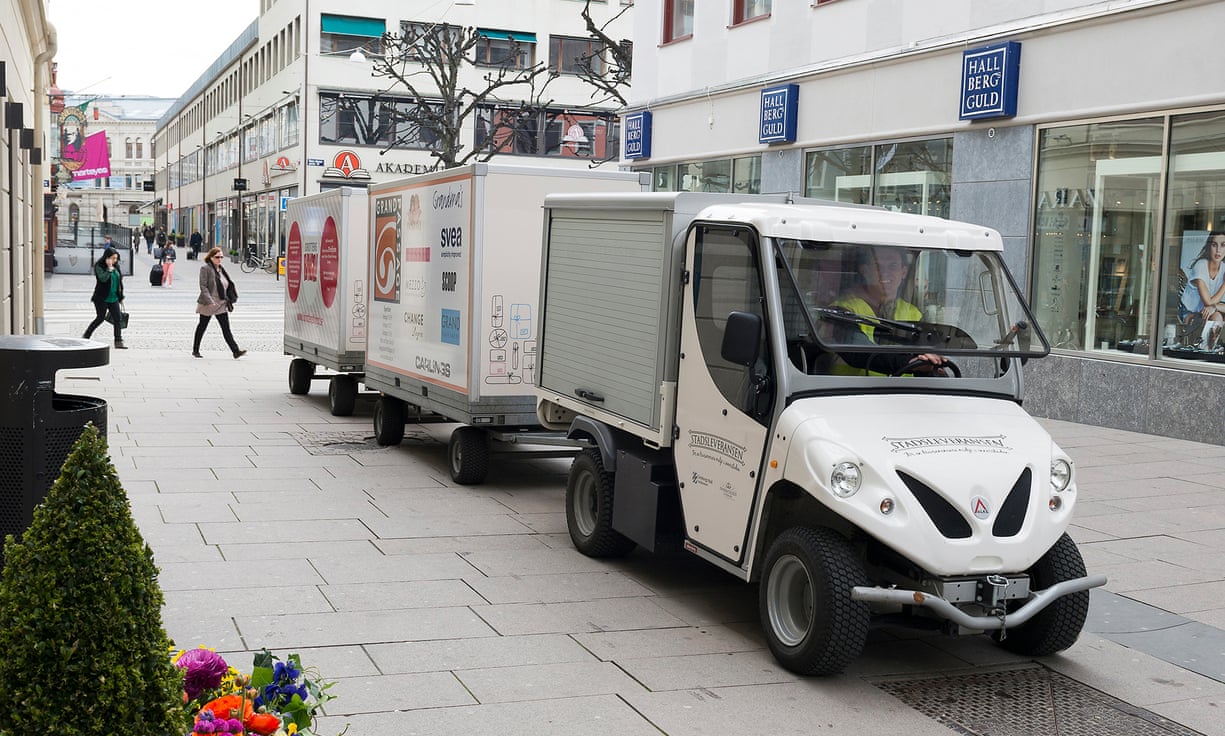
I also wanted to share with you a linked article I found out. It explains how a Swedish town has developped new delivery systems adapted to the complexity of "the last mile delivery" in a urban context. Those kind of tests are in my opinion more relevant than the "drone projects" of Amazon. Nevertheless, it is interesting to see how the supply chain adapts also itself to these new retail needs.


Now Amazon is still struggling to boost its presence in the grocery market, but it invests massive amounts in order to have the proper offer, the proper supply chain, in order to make a deep impact soon. For sure a trend to follow in 2016.

Friday, November 27, 2015

Walmart Invests In Its Warehouse To Compete Online With Amazon


I announced it at the beginning of the year, but it is for use an important year for brick & mortar tycoons which invested a lot in gaining market shares on the Ecommerce playground. Walmart is for sure the retailer that invested the most.

This summer, Walmart has opened a brand new warehouse for that matter. Indeed, to compete with Amazon or other pure players, you need to have the same tools. This is the reason why they opened a 110 000 square meters warehouse dedicated 100% to their Ecommerce business. Why is this warehouse more adapted to the Ecommerce competition?

Walmart plans to open 4 other warehouses by the end of 2015 to reach 95% of the US population. Furthermore, obviously, Walmart owns a large store network that can complete and offer more versatility to customers to get their goods.

This example shows you clearly that supply chain and logistics are key elements in the Ecommerce business that needs to be mastered. It is different to ship goods in full trucks than couple of packages to a home. And Walmart is working actively to fill the gap.

Thursday, June 18, 2015

Why Hypermarts Chains Don't Invest In Specialized Superstore

This is something that came up in my mind not so long ago: Why Hypermarts company like Carrefour, Walmart, or Géant Casino don't invest in Specialized superstore?

Those hypermarts have thriven on a basic idea: To sell everything under the same roof. It allowed them:
  • To attract more people interested in doing a one stop shopping
  • To lower the operationnal costs by working on a large surface
  • Securing high level of sales as they could serve most of the SKUs of people
  • By the size of their store they were also able to negociate the best real estate and to capitalize on it to create malls.
But lately, a lot of people are questionning the hypermarts: Too big, to far from downtowns, they seem to turn off customers seeking for new ways to shop. Moreover, the online competition hurt the hardware categories, especially electronics.

But hypermarts have a great asset: They are able to work on all the categories, which give them a great edge:
  • They master the supply chain: They are able to work on different categories with different kind of issues: FMCG with high rotations and low values, but also high value and low rotations items like TVs or washing machines
  • They master the real estate: Most of the time they own large real estate, sometimes complete malls, and sometimes they work with different real estate (downtown, malls, train stations...). Therefore, they could be able to leverage even more their real estate by providing a more complete answer by proposing banners in electronics, kitchenware, cultural goods...
  • They have strong purchasing powers: As they are some of the most important clients to most suppliers, they already own a great purchasing power securing high margins for their soon to come new banners. They could also benefit from their knowledge of the different categories to co create the concept.
It could also be a great way to attract entrepreneurs willing to develop new activitives in the retail business.

The best example: Auchan
Auchan is a French retailer part of what we call the "Galaxie Mulliez": a constellation of retailers owned by the Mulliez familly: Auchan (Hypermarts), Boulanger (electronics), Saint Macloud (Carpets), Décathlon (Sports), Kiabi (Clothes)...
They were able to build their own real estate company (Immochan), hence one they settled an Auchan somewhere, they could fill in the mall with their other retails. But Auchan did not go all the way to the concept. Hence, all those companies have their own purchasing agency, their own boards ,and share little of their operations. I believe that we may seen soon one retailer trying this strategy to expand its growth and positions.


Monday, March 23, 2015

Supply Chain As One Of The Key For Brick&Mortar Online Strategy


As I have said, 2015 will be the year of a great online confrontation between pure players like Amazon and brick&mortar competitors, like Carrefour or Walmart. If Amazon master the online playground, and large marketshares which will be difficult to earn, brick&mortar owns a large store network to organize click&collect. 

Nevertheless, one of the key factor of success of Amazon is its inventory management. It masters the information of product availability in order to provide higher customer service. I read an interesting article about supply chain on this topic

What the article highlight is that the fact for a retailer to have a complete visibility of its inventory both online and offline, at all time, is a key to its online success. It is easier said than done though: The compatibility and the merger between both the online supply chain and the off line one is far from being achived.
39% of retailers say they have a synchronization of both channels. 44% of the retailers which responded to the study say they can't synchronize both, and 42% of them don't have a complete vision of its customers between both channels.

One of the key to brick&mortar strategy to go online is this information system synchronization and more flexibility in its supply chain. 

Monday, March 09, 2015

How Retailers Can Kick Their Supply Chain Up A Notch

A quick link to an interesting article about what to secure for a retailer in terms of supply chain. 

Supply chain is not one of the topic I discuss the most in this blog, as I am focusing more on Customer Relationship Management, Marketing, Management or Retail Strategy. But probably I should more. Indeed, a strong supply chain secures you the availability of your products, which is key in customer satisfaction.

What the article emphasize the most, especially for holliday season, is how you should secure the availability of your products. In a purchasing strategy, it is also key: Even before having the best price, you should make sure that you will get your products.


Thursday, January 22, 2015

Amazon Is Not Opening A Store In New York, but Why The Information of Their Real Estate Investment in NYC Matters

There has been a lot of expectations about Amazon opening some stores in a near futures. Indeed, brick & mortar companies are investing more and more online, seeking for this new Internet market to deliver growth, whereas it seems that owning a strong store (or at least delivery places) network will be a key strategy for e merchants.
The press has found that Amazon has bought some real estate in New York City, which was thought to be about opening its first store.  Amazon has since responded to that article, by saying they indeed bought some real estate, but not to open a store, but  they sublease the building’s retail space to others.

That still gives a lot of food for thought. That means Amazon may set some partnerships with some retailers in order to boost its business. There may be several options:
  • Retail start ups with cutting edge concept that may benefit from Amazon's supply chain, Internet potential.
  • Some concrete retailers like Walmart or Target that may work with Amazon to set up some partnerships to develop some business together (as Walmart did in its category management with some big suppliers)
  • Or to have some warehouse capabilities in order to develop fast delivery service, maybe with the Amazon fresh concept. Indeed, nowadays warehouses are big places near highways far from the towns, but maybe Amazon could try to have smaller places, closer to customers, that may lower the transportation cost.
This is the reason why I believe this news may soon unveil some new interesting concepts from Amazon.


Now does that mean Amazon will never open some stores, it is still too soon to tell. But I am sure that Amazon will also find some innovative way to create a network allowing its customers to click & collect their products.

Monday, August 12, 2013

Category Management Series: Managing The Product Range And Its Consequences Inspired By The Ikea Edge From Anders Dahlvig

The first blog post I wanted to share about my reading of Anders Dahlvig's book The Ikea edge is actually linked to category management. Indeed, as a category manager, we are responsible of the listing and unlisting of products, and therefore, we need to master the width of one product range.

Most of the time, category manager tends to look after the largest product range. Indeed, owning the largest listing allows your category to become a leader in its trade: The more you have products, the more customers will consider your category as performing. Also, the larger the product range, the larger the sales, as you cover the most customer needs.

But as a category manager, it is also important to always understand what impact having a large range also implies:
  • High inventory,
  • Larger stores to show out your range
  • High wadges due to the manutention cost to put products on shelves.
Ikea is for sure the definition of a hard discounter, or a low cost company as you like. Anders Dahlvig's philosophy is: while choosing between a large product range and supply chain/ operationnal efficiency, Ikea will always choose operationnal efficiency.

As Dahlvig says, Ikea has a target of 2 500 products in its listing. Ikea, thanks to its concept and the attraction of its store, could sell almost anything, and has a lot of great products that supplier show them all the time. But because of their eagerness to get high efficiency on the operationnal point of view, they always keep their 2 500 products threshold. Keeping a short product range allows Ikea to keep low prices because they master their retailing costs.

Should you apply this rule to any kind of retail? Of course not! Amazon's goal is to get as much products as they can, because their business modell is much different than a hard discounter. But when thinking about category management, it is important to always keep in mind the cost of one new product in the range is.


In the Category Management Series:

Wednesday, July 24, 2013

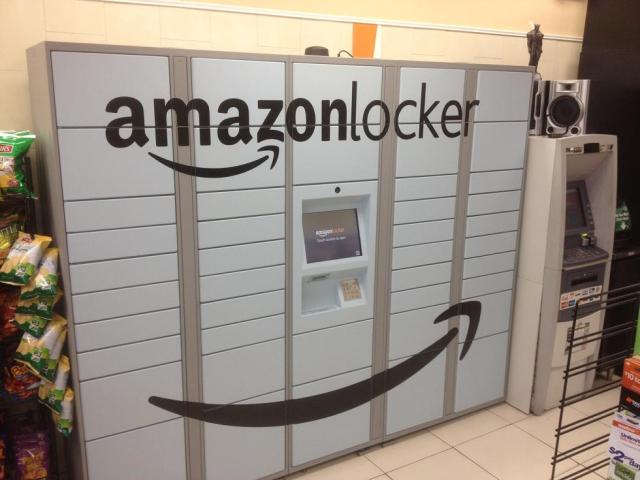
Walmart To Set Lockers In Store For Online Deliveries

In Store delivery is probably the biggest challenge for online business. Indeed, E-commerce is still growing, but its growth pace has slowed down a lot lately. The share of retailing made on the Internet is becoming steady, which is a good and a bad sign:
  • A good sign because it shows that online business is durable and counts for an important share of the overall retailing
  • A bad sign for retailing because most of the growth of retail was based on online activities.


I believe that there is a great opportunity for growth for online retailer thanks to this system:
  • They benefit from new delivery places. In the case of Walmart, in a highly visited place.
  • They can optimize their supply chain by delivering large quantities of goods in one single place, cutting the cost of the last mile (which is very expensive).
  • The system is quite cheap (even though I don't know the fees Walmart may apply to the online retailer, in the caze of Amazon's locker for instance).
  • They can skip the problem of deliveries that unsatisfy a lot of online customers. Who has never had a problem of a product that never came, or late, or had to call the post office to know where the mail has been shipped... This system I believe is more secure.
Thanks to this system, I believe that Walmart.com will get more exposure, and a competitive advantage. It is a very easy way to leverage the store network available in order to get market share online.