Showing posts with label merchandizing. Show all posts

Wednesday, March 16, 2016

De l'évolution des surfaces de vente face à la montée du Ecommerce

Excellent article que je vous recommande au sujet de l'évolution des surfaces de vente en France et dans le monde, réalisé par Kurt Salmons. En effet, nous sommes au coeur de la transformation du commerce:
  • Le E commerce est en phase de maturation, avec des croissances de part de marché qui se stabilise
  • Des enseignes brick & mortar qui ont déjà bien entamé leur mue en acteur multi canal, notamment en développant des sites Ecommerce mais également en développant le click & collect
  • Des enseignes qui ont déjà commencées à se concentrer. 

Quelques unes des idées fortes relayées par l'article:
  •  La nécessité de retravailler les parcs magasin. On le voit, la plupart des enseignes commencent à fermer des magasins lorsqu'ils sont non rentable ou non stratégique. La concurrence Internet + maturité des marchés + une augmentation des coûts d'exploitation (lié au marketing du point de vente, hausse des loyers, et plus faible CA/m2) = besoin de rationnaliser les parcs. Target, Walmart, Best Buy ont déjà commencé.
  • Néanmoins, il y a de la place pour de nouvelles enseignes internationales. On en a déjà parlé ici, mais Costco arrive en France lorsque Lidl se lance aux US. Kiko, Zara cartonne en France, quand l'Occitane est clairement une enseigne internationale. Lorsqu'il y a un concept fort, il y a encore de forte expansion de nombre de magasin, qui d'ailleurs jouisse de la rationnalisation des autres acteurs.
  • La necessité de travailler le marketing enseigne: Il faut travailler des réponses de distribution de plus en plus marketer, de plus en plus en lien avec les attentes clients et les spécificités des bassins de consommation. Plusieurs stratégie à mettre en place, soit à la Carrefour, avec une marque ombrelle, soit plus comme Casino (c'est là où je suis pas d'accord avec l'article, qui essaie de montrer la stratégie de Casino comme en phase avec Carrefour), qui multiplie les marques en fonction des attentes consommateurs: Franprix (proximité), Monoprix (Premium), Géant, Casino, spar (la montagne), Leader Price...
  • La necessité de clusteriser le front de vente: Celui qui l'a fait le mieux, c'est Best Buy aux US, avec une analyse chiffrée des zones de chalandise, pour organiser son merchandizing visuel, son offre catégorielle, ses services, etc... Cette analyse sera rendue beaucoup plus facile grâce au big data
  • Le besoin d'investir dans les systèmes d'informations: Afin de répondre aux challenges de la distribution du futur, des attentes consommateurs, du multi canal, mais également des coûts d'exploitation, le big data va être clé, pour pouvoir analyser et améliorer les process de décisions.

Ce qui est intéressant particulièrement avec cet article, c'est de bien voir que cela a déjà commencé, et que pour certains, il est peut être déjà trop tard.


Wednesday, February 24, 2016

Category Management Series: New Technologies To Revolutionize Merchandizing (2)

There was another part of merchandizing I wanted to discuss about in my previous post, but that was discussed only briefly at the IFM: Online Merchandizing. To be more precise, Drive Merchandizing.

Indeed, Drive thru grocery retailing will soon account for 8 to 10% of the global market. And it is constantly growing. And yet, a lot of opportunities are not leveraged so far:
  • Cross merchandizing: You have a lot of opportunities to cross merchandise items that you could not do in the real world. For example: milk. You can't place it in a real store at two places, even though placing it near cereals make as much sense as placing it in the cooking section. You can have several cross merchandizing strategy for a same section online.
  • Enriched content: In store, you may have limited information about the usage of one product. For products such as stews, you may have video to advice you which receipes to make with.
  • You may test more depending on the shopper behavior: you have history purchases so you may display the categories differently to try to have the most efficient merchandizing strategy.
  • You may adapt to your local area, with for example specific offers, depending on the local store activities.
  • Work on the different screens: You should adapt to smartphones, tablets, or even other screens to provide a great shopping experience. Maybe there will be different merchandizing strategies.
  • Extra activities to develop: Why would there be no hardware on drive thru somedays? 
So a lot of things can happen also on this.


Monday, February 15, 2016

Category Management Series: #Crossmerchandizing : You Better Be Careful With It

One of the most known technique about Merchandizing is cross merchandizing. How it works: you place near a best selling product a complementary product, to lift its sales, so you can add an extra product in the basket of the shopper. 
For example, you place the batteries near the remote control sections for the shopper to get both. Most of the time it is highly beneficial, as the complementary product is more profitable than the best selling one. 

Now it does not mean that you should add cross merchandizing all over the store. Indeed, because if you use too much of this technique, you may annoy customer. Moreover, the cross selling product must be consistent with the product where it is placed near. Here are bad examples I found during different store checks. 

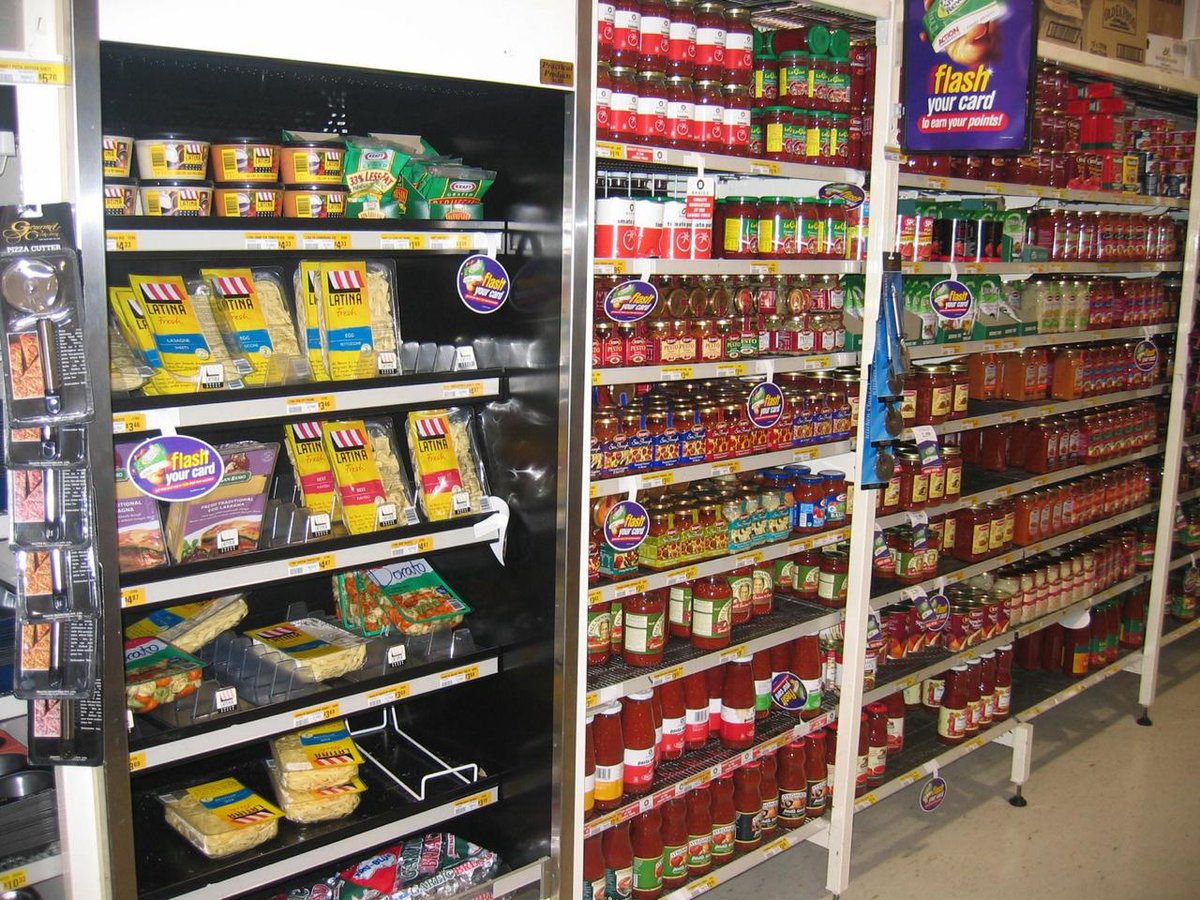
Why would you place lipsticks near the perfume section? Same thing: Batteries near the milk area? 
Obviously you may have impulsion purchases anywhere, but by having such cross merchandizing initiative, you are just showing out how complex your offer is, and you are not helping at all your customers.


Two good examples now: The cooking books near the frozen veggies at Picard (which makes sense to use them), and the coffee machine cleaning products near the coffee section. By doing so, you are clearly helping the customer in the purchase and the usage of its product.

But once again, you should be careful at having a clear sense at cross merchandizing initiatives.

Wednesday, January 13, 2016

Category Management Series: New Merchandizing Tool To Boost Category Planning

High Tech company Dassault Systèmes has been working for a long time now on a new merchandizing tool addressed to retailer. The purpose is to propose the most updated technologies in the merchandizing plan process. As you can clearly see in the video, the new tool developped by Dassault allow both the suppliers and retailers to have a great vision on what a merchandizing plan will look like in the real life, thanks to 3D.

I also know that Unilever has been working in different countries with such a tool, but I wanted to share with you this video to clearly show you what the future of merchandizing will be.

I have also seen a great tool at Les Journées de L'IFM, allowing someone to use its mobile phone to take pictures of each elements of a store, than to process it to have extensive data of the product range in one store. I have seen also some tools allowing someone to create a merchandizing plan in minutes simply by giving information on the merchandizing tactics to use (raise sales, profit, limit stock outs...).

Those initiatives are great, because I still believe that the operationnal process of merchandizing is still too slow to have a good strategy about it.

Wednesday, November 18, 2015

Category Management Series: The New Age of Merchandizing


Merchandizing is a key element of a category management strategy. It is at the cross road of several key departments, and interests:
  • The supply chain, in order to maximize its efficiency and lower the potential stoc outs
  • The product range, in order to set it up clearly for customers
  • The maximization of products expositions depending on their performances.
Merchandizing must evolve. We are living in the age of big data, and customization. Therefore, merchandizing must take advantage of the new technologies in order to allow retailers to set up fast planograms that suits the local clientele by adaptating the product range and organization fast.

Moreover, merchandizing is probably an element that needs to benefit from big data in order to take into account more closely some other key elements of retail performance. For example, by being able to understand better the supply chain problematic, in order to propose at all time the most efficient supply chain by taking into account the pace of orders of the warehouses for example.

New technologies are coming out. Especially 3D schemes allowing to better understand the impact of certain choices.

New customer interface in store is also possible, by using new mobile technologies, augmented reality for example. 

Merchandizing is already at the moment a difficult art. The number of products listed has skyrocketed over the last decade, about 30% of the product range change each year with a high number of innovations coming in. But merchandizing as a high potential to go beyond, thanks to big data and new software, which will allow to better serve customers. 

Thursday, August 13, 2015

Twitter Feed To Follow For Retail Pros: The Shopper Marketer @ShoprMktg4users

I don't necessarily advertize a lot about the people I follow on the Internet (even though I don't hide it, as you may check the people I follow on LinkedIn or Twitter), but this time I wanted to share with you the fidings I made about The Shopper Marketer.

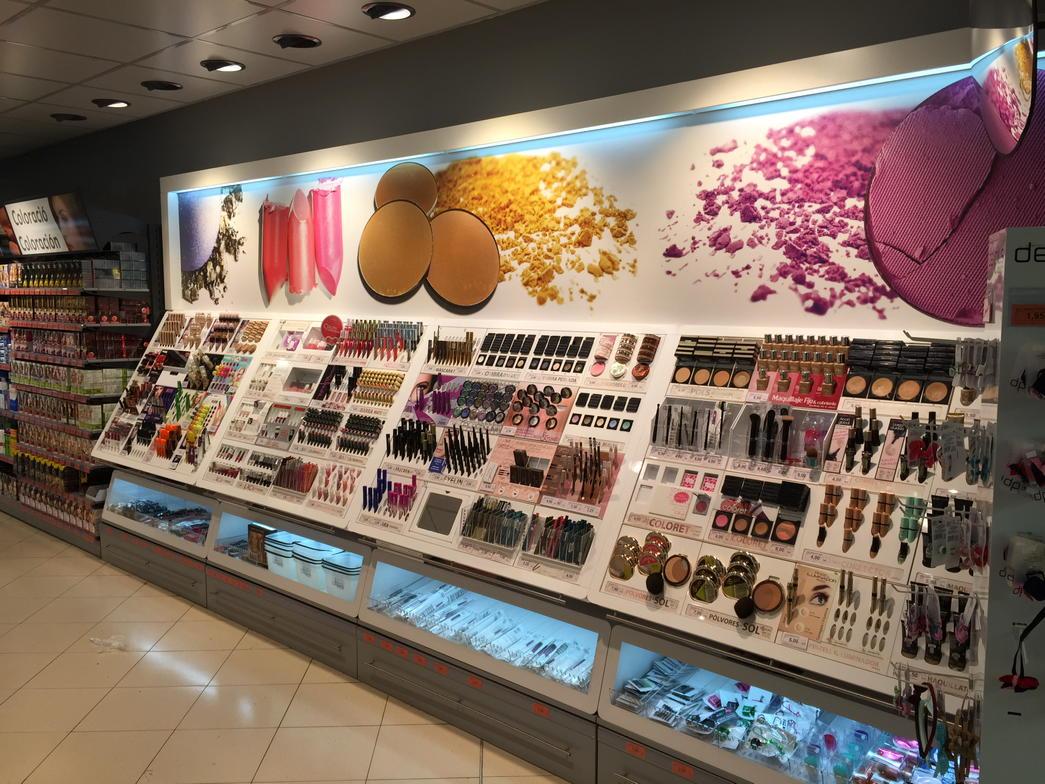
Retail is detail, and operational execution is key. There is so much that could be done on a point of sales to trigger the sales, to introduce new products, or propose new ways to shop, that I am always amazed. I don't exactly know who is behind the twitter account, but it feeds us with great pictures of in store merchandizing initiatives, from all over the world (or at least Europe). A kind of International Olivier Dauvers. I love to hang around, seeing the new pics he posts. Here are a very few pics I found interesting. 

Mercadonna and its lovely display of Make Up in Spain, with the creative shelve drawer under. 


Monday, May 04, 2015

Big Data Applied To Retail & CRM purposes

Big Data is obviously a big trend in our business world, but most of the time it is difficult to exactly understand how it could be used in a concrete environment. Big data has not a precised definition, it is rather a state of mind and/or a fact: Thanks to the information systems we have two facts that comes together:
  • We have on one hand a massive load of data, that could give us more than necessary details about supply chain, customers behavior, sales, marketing effectiveness..
  • But more importantly, tools that are able to analyze this data, and gives us a new vision of our business. Terry Leahy, former CEO of Tesco, explains in his book "Management in ten words" how its company had to wait for powerful computers to be available prior to launch their loyalty card, which allowed them to have customized messages and to have an hedge on their competition. Now the tools are available, we just need to know how to use them.

Target Uses Big Data To Redifine Its Merchandise Strategy by Clusters
When you are a nationwide retailer with a large network of stores the question of how to meet local demand is crucial and difficult. Hence, once you adopt a merchandising strategy, how could you have a plan that will both meet national strategy and local specificities?

First of all, you need to set the right data in order to adapt your merchandizes plan: Is it based on geographic data? Socio-demographics? Sales performance? Moreover, the history of the store may have a deep impact on its performance: Has the store be renovated? Is it obsolete? What kind of competition do you face?

Big data allowed Target to find the right mix of data in order to segment its store networks, in order to propose the right merchandising response. They found out the 3 most reliable data to set a predictive modell with a correlation rate of 73%. 


How Dannon Improved Its CRM Efficiency Thanks To Big Data
As one of the leading FMCG supplier, Dannon owns a large customers data base, which it uses for its CRM programs. It mails to its 4 million members a quaterly newsletter with coupons. The issue was the ROI: Each euro spent returned 3 euros...

Dannon worked on two items:
  1.  Work on the members that did not use the coupons. Some people are not responding to the trigger of coupons. Therefore they were left aside of the mailing.
  2. Mutualize the mailing with other FMCG suppliers that own the same CRM strategy. They hence partenered with P&G in order to mutualize the sending and save some costs.
Hence, Dannon was able to turn their 1for3 to a 1 for7 ratio.