Showing posts with label air france. Show all posts

Monday, November 07, 2011

How Strikes May Impact Customer Relationship Management: Air France Case Study


Customer relationship management is a science which is at the crossroad of the different functions of one company. Of course, most of it is managed by the marketing staff, as it has a lot to do with researches, and communication with customers.

But it is also a focus which th whole company must take care of. This is the reason why a lot of the time we talk about "Customer centric companies", meaning that CRM takes a core part of how a company deal with its business. But most of the time, real 100% customer centric companies does not exist, and therefore it is sometimes hard to get all the pieces together.

Air France is one of the leading airline company in the world. It secured its position thanks to its image of a premium service company. This image has been built throughout the time, thanks to a lot of details, those small details which creates the big things... One of the very good example: A lot of my American friends know Air France because they serve Champagne on board.

Air France is taking customer relationship management seriously, and they have always been a trail blazer in terms of loyalty reward program. They also make their best to respond to customer complaints as fast as they can.

But sometimes, Air France's customer relationship management is experiencing damages, due to unusual circumstances.

For this November hollidays season, Air France personnel was on strike, protesting to job cuts speculations. Due to these protests, Air France's planes had to take off with 50% of their planes empty, due to lack of staff on board. 

Air France knows how to deal with those kind of issues:

First, because they have a very competent risk management department, which has been used to deal with different kinds of problems (the Icelandish volcano crisis this year, other strikes, political issues in some countries)...

Secondly, because strikes are quite frequent at Air France. I could quote French show "Les Guignols", which mention that strikes for November hollidays season at Air France are sort of a "tradition"...

And this is a real issue: You could be as good as you can be analyzing customer data, providing high quality communication material, being responsive in crisis time, sometimes, those social events can impact big time the image of one company.

So what can Air France do?

To be honest, Air France is far from being the worst of the airlines company to work for. But the way they deal with their employees (which are by the way the first ambassador one brand can have) is very important in order to maintain a  high customer service at all time.

In overall, strikes may be prevented by having strong relationship with unions, but sometimes, they are very difficult to avoid, especially in some specific industries. 

But human resources management, and social crisis inside a company can have a large impact on one company CRM Strategy.

Tuesday, December 14, 2010

Will Twitter Replace Call Centers?


At the early stage of the rise of Twitter, a lot of expert as myself have seen the great potential of Twitter to deal with after sales services. It works somehow like a mix between a FAQ (frequently asked questions) and an email inbox.

Some companies like Best Buy have already adopted the system with success. Also, we have seen how good Air France has used this tool to deal with the Icelandish volcano crisis to propose new flights to its Twitter followers.

During the 90s and the 2000s, the call center industry has skyrocketed. Thanks to new routing technologies, setting up a call center to deal with customer disatisfaction was a very effective way. Also, it was a great way to enhance customer relationship management for direct sales company, and the new coming E commerce actors.

But as every technology, it is challenged when a new one appear. And therefore, I was wondering if it was possible to switch a call center activity to a Twitter feed.

Now let's start with what is sure: in a near future, all companies will need a Twitter account to deal with customers/prospects questions.

The only problem for companies is that it will once again complexify the way to deal CRM, and customer relationship manager will have a lot of questions... In fact, call centers will cost more and more money, and it will certainly lose its competitive advantage upon owning a salesforce or a retail chain. But human voice is one of the most important medium for human interractions. And therefore, if you want to keep a strong customer relationship, it is important not to avoid this very important factor.

Customers are fed up to deal with machines, and human would rather speak to an actual person instead of dealing with a machine.

Here is my conclusion:
  • Call centers will still exist, and it will actually be a strength for businesses which owns some. Nevertheless, their activity will probably slow down.
  • Twitter will for sure take some of the flow of questions of customers. Not only Twitter, probably Facebook will too.
What is for sure, it is that both will be reunite with the arrival of the mobile area: You will use your smartphone either to find on Twitter your response, or to call a call center if you haven't find what you were looking for.
What do you think about it?

Wednesday, September 08, 2010

Air France Launches Its Low Cost Subdivision For Local Flights


Air France is experiencing difficulties to keep a leading position in the local flight market in France. Due to its high pricing policy, low cost companies have thrive on this business segment which was hence neglegted by Air France, as it was not representing a profitable activity for them.


Nevertheless, the overal airlines competition has become tougher, and with high gas prices, it is difficult to remain profitable and earn money in the industry. As we have seen, United and Continental have merged this month. And this trend has gone on for quite a while.


Hence, Air France decided to launch its low cost company, dedicated to local travels.


Now some experts are questioning this decision, doubting about how Air France could deal with such a heavy administration to cut cost and hence have a profitable low cost business.

Nevertheless, launching such a service can’t hurt: Local travels are a non profitable business for Air France, and switching for low cost could just help them to improve their market shares and to adapt to the competition landscape.

If I were Air France, I’ll try to monitor what happen with other brands which decided to launch a low cost branch. I have always found interesting to go further than your basic market to find ideas in other industries which you could adapt to your own.

Thus, some great examples of premium brands that launched their low cost subdivision :


  • Carrefour owns DIA stores, and they have been able to leverage the purchasing power of the group to get great pricing.

  • Esso which launched Esso Express.

  • Renault created Dacia

  • Levi’s created Levi Strauss Signature for hypermarket distribution channel.

  • Dannon with its pack of 6 yogourhts for 1 € (which actually was a failure).

  • Accor hotels with Formule 1 (which is the leader on the low cost chain segment)

It is difficult for large companies like Air France to get into the low cost business. Most of the time low cost companies have started as start ups, which gave them the ability to innovate. Bigger firms tend to be more prudent than younger ones. As strange as it might seem, large corporation, which owns great innovation budget and large R&D departments are less likely to leverage it into actual new concepts.

Also, as a company developed a strong business model, acquired a certain size, and have to meet expectations of shareholders, it is difficult for it to adapt to brutal shift in market trends. I have heard on the radio this very great phrase: “It is not stagecoach firms that invented the car”. But I believe that low cost has changed so much the airlines market that it is mandatory for Air France to find a viable way to take advantage out of it.


It is funny because this post comes after having discussed about how Esso went low cost. As I have said for Esso, as you have developped a wide range of service and customer relationship management tool, you may know which ones you may take away, and which ones are the most important.

And you, what do you think about it?

Thursday, May 27, 2010

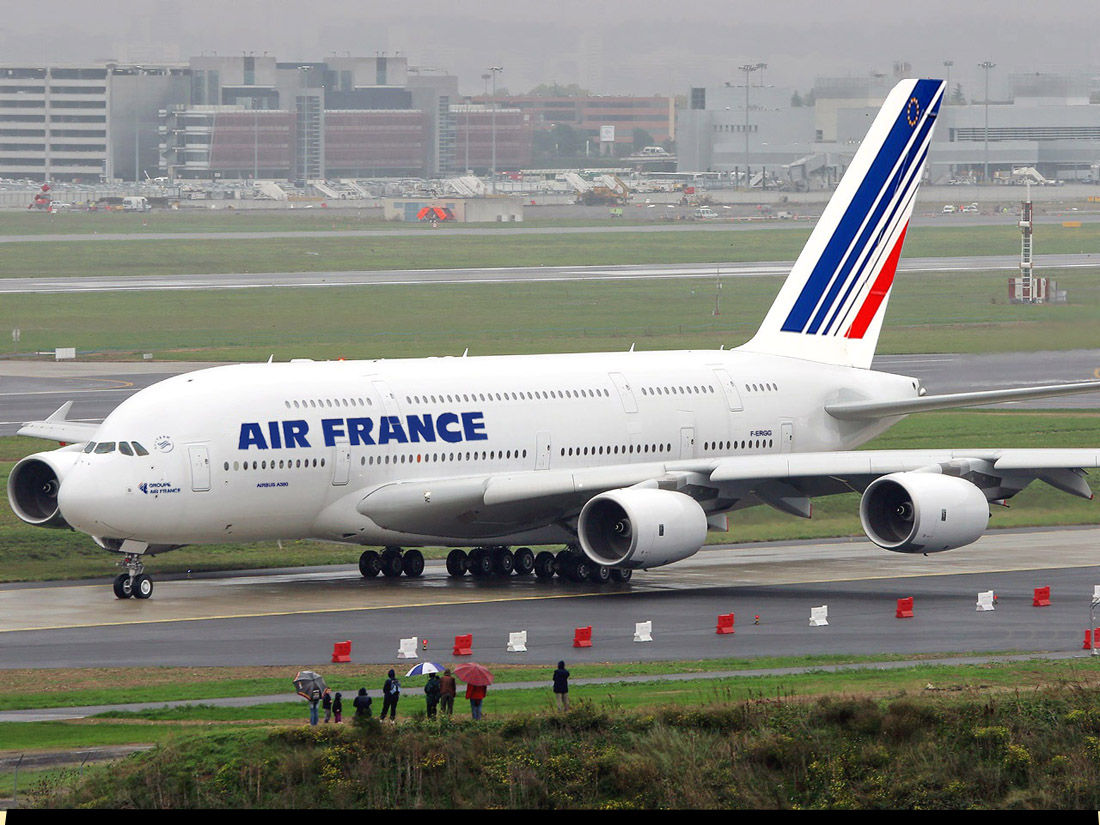
My Air France A380 Flight To New York: Premium Customer Experience


I have traveled a lot by plane to the US in my young career, as I have worked several times in the US. I got used to those long flights, and I got accustomed to it. But this, time, I had the opportunity to travel with the brand new A380 aircraft from Air France.

I knew the aircraft was great, but to be honest with you I did not expect anything special from this flight. Now there are a lot of very small details that made this flight pleasant and memorable:
  • You can actually see with a video placed at the end of the aircraft the take off and the landing. This is very exciting and new to me.
  • You have a large choice of multimedia activities: You don't have couple of movies but about twenty to pick from. You may start whenever you like the movie or stop it.
  • About the Air France airline, the crew was very nice. The food was great, and we weren't charge neither for pillows, sheets, nor headphones (which is pretty rare nowadays).

From my prospective, I have never really cared about the airline before. I did not see really much difference. But the last time I traveled to the US, I traveled with Air India, and that has just been the worst experience ever. Poor service, the aircraft was obsolete, and it was just horrible. It was by far the cheapest, but to be honest with you, I'd rather pay twice as much not to deal with that.

Now I believe that Air France and this flight is a great customer relationship management case study. Air France might be expensive, but they provided superior customer experience, by providing all those little services that makes the difference. By trying to cut costs too much, you make customer experience bad, and the facial value of what you pay is very low.

Those little snacks, those little attentions might actually not cost you that much, especially while you consider the added cost you charge, but it has a high facial value, and this is the reason why it is worth doing it.

Cuts costs = lowering facial value, instead of higher pricing + extra services = high facial value, which leads to customer satisfaction, and ultimately customer loyalty.

I recommend you if you have the opportunity to fly with this Airbus A 380 of Air France, trust me, it is worth it.


Sunday, May 02, 2010

Ipad As A Customer Relationship Management Tool

The Ipad is a unique device which can't be compared to any of what we know so far. More even than the Iphone (as other smartphones allowed you to navigate on the web or to acting like multimedia players), the Iphone will change the way people interact with computers and Internet.

As Steve Jobs explained, this is a totally new way to experience media. And consumers are still figuring out the best way to make the best out of the device. Now Ipad allows companies to create their own applications. It will be very interesting to see how you can create your own application as a company to make the best out of the device.

Of course the Ipad is not a mass market product yet, and might never become, but it might be a great marketing tool to establish a strong customer relationship management program. Hence, if you are Air France, Louis Vuitton, Nespresso or other premium brands, you might find a way to develop great apps.

Do you have any ideas of apps a brand could develop? Do you ave examples?

Sunday, April 25, 2010

Air France Uses Twitter To Deal With Customer Service During Volcano Crisis


The volcano crisis that hit Europe those past few weeks have been a remarkable example on how to use social media to deal with crisis and customer care. Indeed, I have several of my friends that were supposed to take a plane to go on vacations or to come back to France. Trying to reach someone over the phone was absolutely impossible, with waiting times of about 2 hours...

But some smater people, who were familliar with Twitter, decided not to reach the airline company via phone, but to tweet to their Twitter account. And hence, surprisingly, it seemed that some companies like Air France, were actually pretty active, and proposing solutions thanks to twitter.


Hence Air France proposed to many to rebook their flights, and so on. Actually, the Twitter account of Air France has been designed for commercial purposes, proposing special offers. But due to the many questions they had to face, it turned into a special customer service medium.

Actually, this is a true web 2.0 mindset they had, listening to customers, and then adapting their message to the need of the community.

This is a beautiful customer relationship management example on how to use social media for customer service, especially during crisis. I believe that call centers are not really made for those crisis, as they can have a specific amount of calls per hours, and therefore note really to adapt fast while they have a huge amount of call. Hence, here are two short comes for call centers during crisis:
  • They are sized for specific and predictable needs. Thanks to history, you are able to know how many representatives you should put during a certain period of times. TO dramatically increase your number of people is difficult, for scheduling reason, but also for technical reasons, as you might not have extra desks to open.
  • They have to standardized responses: Call centers have developped softwares to have an answer for 90% of customer's questions. Some of them are not even adapted to their questions, but when you have questions that are way out of the lines, they are not adapted, and representatives have not the power to go beyond their assignment, which is necessary.
This is a case study to remember for the crisis your company might have to face in the future. And you, what do you thing about this story? Do you have other examples?