Sunday, November 21, 2010
La Caisse d'Epargne lance une nouvelle application
Thursday, November 18, 2010
Carrefour innove avec sa carte fidélité grâce à Carrefour Planet
Connaissez vous Carrefour Planet ? Si vous êtes dans le monde de la distribution vous avez certainement du déjà entendre parler de ce concept prometteur, que Carrefour a lancé en grande pompe cet été. En effet, afin de pouvoir relancer l’activité des hypermarchés, mis à mal depuis quelques années par des formats de plus petite taille et par la crise, Carrefour a décidé de lancé un nouveau genre d’hypermarché, en travaillant au maximum pour que ses rayons soient les plus attractifs possible.
Lors de ce processus de réinvention de l’hypermarché, Carrefour en a aussi profité pour redynamiser sa politique de relation client, en créant un nouveau système pour sa carte de fidélité. En effet, il est rare de voir des programmes de fidélisation innovant dans le secteur de la grande distribution, alors que c’est ce secteur qui avait contribué à sa popularisation.Ainsi, Carrefour propose un système de fidélisation basé sur la fréquence d’achat. En effet, la fréquence d’achat est un facteur clé de réussite pour un distributeur en particulier, mais aussi pour tout programme de fidélisation. Henri Kaufman, l’a d’ailleurs très bien expliqué dans une récente note sur son blog, où il propose « un système reposant sur la régularité des visites ou des achats, plutôt qu’un système lié exclusivement au chiffre d’affaires réalisé ».
Carrefour propose comme avantage a ses meilleurs clients de gagner des journées à -10% sur tous le magasin, dans la limite de 1000€.
La clientèle est segmentée en 3 en fonction de la fréquence des achats (1 visite = un achat d’un montant minimum de 40€, une seule visite par jour étant comptabilisé:
- Or : 5 visites par mois (soit 30 visites/semestre) = 3 journées Carrefour Planet par semestre
- Argent : 4 visites par mois (soit 24 visites/semestre) = 2 journées Carrefour Planet par semestre
- Bronze : 3 visites par mois (soit 18 visites/semestre) = 1 journée Carrefour Planet par semestre.
Les programmes de fidélisations à plusieurs niveaux
De plus en plus, les entreprises proposent des programmes de fidélisations à plusieurs niveaux. En effet, l’idée même de CRM et de gestion de la relation client repose sur le fait que les consommateurs n’ont pas tous la même valeur, en fonction de leur potentiel et de leurs volumes d’achat.
L’un des besoins primaires de l’entreprise lorsqu’elle développe un programme de relation client est de développer sa connaissance client. Aussi, il est important qu’elle touche le plus grand nombre possible de ses clients, pour pouvoir avoir des données exhaustives sur sa clientèle.
Mais passé cette première phase, dans les programmes de fidélisation mature, les clients A+, Or, ou les 20/80 (en fonction du terme choisi) exprime bien souvent une envie d’une plus grande reconnaissance. C’est pourquoi de plus en plus de société propose comme Carrefour Planet, des programmes à plusieurs niveau en fonction du profil du client. Ainsi, Micromania propose différentes cartes de fidélisation payantes en fonction du profil du consommateur. La Fnac a récemment lancé son programme de fidélisation Premium, Fnac One, pour une niche de consommateur. Néanmoins ce programme a été décrié car les conditions d’admission au programme semblent être opaque, et ainsi ne donne aucune possibilité à un consommateur d’aspirer à rejoindre se groupe.
Le système de Carrefour Planet a le mérite d’être clair, et on sait exactement ce à quoi le client à droit et comment accéder à un nouveau statut.
Calcul du taux de générosité
Comme je l’ai appris lors de mes cours de fidélisation, je vais calculé le taux de générosité pour les clients or :
- 30 (visites par semestre) x 40 € de montant d’achat minimum = 1 200 €
- Soit 100 € x 3 (montant maximal de la remise) / 1 200 € (montant minimal d’achat pour accéder à la remise) = 25% de taux de générosité théorique.
Je dis bien là que c’est un taux théorique, car le panier moyen en hypermarché est au minimum 2 fois les 40€ dont parle le système.
Néanmoins, je trouve que le système est attractif pour le client, et favorise la fréquence d’achat, donc les occasions de ventes complémentaires. De plus, le client peut savoir a n’importe quel moment le nombre de visites qu’il a déjà effectué.
Et vous, qu’en pensez vous ?
Wednesday, November 17, 2010
Leclerc lance une application Iphone pour booster son Drive
Leclerc vient de lancer une nouvelle application Iphone très innovante, nous révèle le magazine LSA du 12 novembre 2010. Cette application permet d’accéder au site Internet « Leclercdrive », avec les mêmes identifiants, mais propore aussi des nouveautés. Ainsi, on peut entrer ses informations de carte de fidélité, mais aussi scanner les produits qu’on désire rajouter à la liste de course. L’intérêt étant de facilité les procédures de réassort, et donc de développer la fidélisation du client au service. De plus, Leclerc lance via cette application ce qui semble être la première plateforme de paiement en ligne via mobile.
Je trouve que c’est une très bonne idée de développer ce type d’application, notamment pour le service de Drive. En effet, le Drive a réussit à s’imposer grâce à une interface soignée sur Internet, qui permet d’avoir une excellente expérience d’achat. Retrouver la même qualité sur mobile propose un vrai service à valeur ajouté au client, et donc permettra certainement de travailler la rétention de client, mais aussi certainement le panier moyen.
Et vous, qu’en pensez vous ?
Tuesday, November 16, 2010
Questions about Advertising on Twitter
How well can I segment my audience?
Twitter didn’t comment on the news, so there aren’t explicit details about how the targeting will work. "Ad Age" says users will be targeted based on the people and products they already follow. Makes sense, but in-stream ads will be more effective if Twitter can offer more granularity.
In the case of Red Bull, for example, has a potential ad recipient tweeted about energy drinks in general? Or can Red Bull target them because they’ve tweeted about being tired? Will keyword-based targeting be an option? What about geographical targeting, or segmenting messages based on different times of day (dayparting)? What kinds of segmentation on Twitter would be most useful to your campaigns?
My Thoughts: I believe it is important that Twitter provides a clear tool, which would be easy to use to the announcer, in order to set clear advertising strategies. Google has made a great job by creating tools which will provide great estimations of campaigns’ success, and ways to think a keyword campaign.
Social media marketing is about giving up “control” over consumer reactions, but not about completely aborting a brand’s core messaging. The 140 character limit for tweets means that messages need to be quick, catchy and yet still retain the brand’s unique “voice,” all while delivering a pitch or call to action.
My Thoughts: On this one, I don’t see any solutions. Social media is about giving up control, and hence, it is important to provide great content which will lower the risk of bad buzz. Also, social media is not for all companies. It is important to have a strong brand equity, which will secure a great conversation with the audience, and hence lower the number of bad comments and negative buzz.
How do I determine my ROI?
This has been an obstacle for many social media campaigns that aren’t tied to specific ad units. Twitter could solve this by giving advertisers custom, shortened URLs for their promoted tweets, and providing the analytics on clicks.
The company has its own URL shortener – t.co – that makes this possible. A t.co link within an ad could even drive traffic to special landing pages, or serve as a link to download a coupon. This would make Twitter a more effective tool for direct response marketers, not just brands. How would your team determine the ROI of an ad in a Twitter timeline?
This would be very interesting to have tools to estimate return on investment. Especially because announcers will compare Google keywords campaign efficiency versus Twitter, or Facebook. It is therefore important to provide data of the interest to go for Twitter.
Monday, November 15, 2010
Facebook Launches New Deal Feature For Business
Mc Donald’s have already set up a great case study, while it increased by 30% its sales thanks to a Foursquare campaign. Hence Facebook has launched recently Facebook Places, which aims to compete with Foursquare. Facebook has a great advantage on Foursquare, as it owns already a way larger audience, which already spends a lot of time on the social network.
Facebook has declared it will launch a new deal service for business to use. Businesses will be able for free (at least so far) to create deals which will be displayed to Facebook Places users. When someone will check in somewhere, it will be able to see the deals proposed nearby.
I believe this is a great strategy for Facebook to propose this service for free, as it will give a lift to Facebook Place, which will be more attractive for customers as it may propose a larger amount of deals than Foursquare.
During the conference, chief executive Mark Zuckerberg seemed to place a particular emphasis on the friend deals — after all, the ability to tag friends, including friends who don’t normally use check-in services, helps Facebook Places stand out. When I first heard about the deal tagging system, I was concerned that it might lead to lots of fake check ins, but Zuckerberg noted that users need to present their coupons in-person to claim a reward. So it would be hard to claim that you brought three of your friends to the store if you’re there by yourself.
During our interview, Kendall also emphasized the tagging feature: “We think it’s a real digital representation of how people discover local businesses offline.”
Facebook uses its size in order to get leverage, and hence to get a competitive advantage on the competition, which remains small start ups. I find the strategy very interesting.
Thursday, November 11, 2010
How To Improve Blackberry
I wanted to share with you a need I have about my Blackberry. I have been owning a Blackberry Curve 8900 for about 2 years now and I have been very happy about it (even though it is sometimes slow to go on the Internet, but it is OK).
Nevertheless, with the rise of web 2.0, Twitter and social media, I believe my needs have evolved in terms of smart phones. My expectations for this kind of devices increased. Prior to my Blackberry, I used to own a windows mobile handheld, which was very convenient to manage both my contacts and my schedule.
My Blackberry is better though than my old handheld. It is very easy to enter my to do list and agenda. Nevertheless, as I am blogging a lot and surfing on the Internet to get source of information, It seems that it is difficult to manage different sources of information through Blackberry.
What is on Blackberry seems to remain on Blackberry, while I’d like to access it everywhere I am, on a laptop, computer and so on. Therefore I believe Blackberry should own an app which would allow to store some files which could be either used on Blackberry or on a regular computer, but also would allow to save and range easily articles found on the web.
The idea would be to have at all time a copy of my Blackberry activities on line, which could be actually accessed thanks to either a website or an application.
Is there anything which looks like what I need? Feel free to contact me to discuss about it.
Wednesday, November 10, 2010
Offermeatrip: A Great Vendor Relationship Management Example
Vendor Relationship Management, or VRM, may be defined as a reverse customer relationship management concept. Instead of a company making you offers, the customer is expressing a need, and companies are in competition in order to complete.
Offermeatrip is a soon to be released website which proposes to users to design their dreamt vacations. Travel agents access to these data, and may make an offer which will fit customer’s will.
VRM concepts have been around for a while, but cases are pretty rare so far. Offermeatrip is a good example applied to the travel and leisure business.
Tuesday, November 09, 2010
Ipad to Improve Customer Experience
What is fascinating with the Ipad is the way Apple has been able to create a need by designing a brand new handheld which does not look like any other handheld in the market. And as it is brand new, Apple needed to explain how to use the tool. Now some people have been able to find new interesting ways to use it to improve customer relationship management, especially customer experience but also to improve sales force tools.
Here are some few examples you may adopt to help your customers and your sales team:
Provide an Ipad to the shopper: You may provide to your loyal customer as a premium service an Ipad while shopping. Thanks to a brand application, your customer will access to some interactive information on the product. He may watch videos, user comments, or maybe ideas on how to use it.
Use it as a tool for your sales fore: Your sales force may use it to display some strengths of the products. Let’s take the example of Mercedes USA. Car dealers have tested the system where salespeople have instant access to marketing programs for specific models, credit application process, among other information.
During business fairs, Ipads are very convenient to hang around the halls, and to provide quick Powerpoint presentations on the go.
Improving staff service: Some hotels have given to concierges Ipad, which help them provide information to customers about the area and potential events.
Do you have any other good examples of the use of Ipad as a CRM tool?
Monday, November 08, 2010
The Art Of Mobile Advertizing
To be honest with you I don’t really master the art, as I don’t have much experience in this field. I also believe not a lot of people do, because it is new, at least in terms of real media (prior to this year, mobile advertising results were pretty low). What I really like in this article, it’s exhaustive.
Mobile Display Formats
For this first installment, I’ll focus on the prevailing mobile display formats. Mobile tech and content is always moving forward, creating new opportunities for brand impressions and actionable ads (read: still the wild west to some degree), so I am bound to miss some here.
Mobile Web Banners and Text Links
Mobile web banners and text links were among the first - and are still – among the most common forms of mobile advertising. Banner ads (sometimes with accompanying text links) are displayed on mobile web pages and are typically clickable. For the sake of this post, I will define mobile web (aka WAP) as content viewed through the phone’s browser (not though a native handset application).
Best practice is to create mobile-specific banners with a strong, simple call to action. Please take this seriously. Reusing banners from wired web campaigns is a recipe for failure. Your client’s logo may be microscopic and unrecognizable on a small mobile web banner. The Mobile Marketing Association has great documents that track the current typical banner sizes. Naturally, you should check with each of your publishers and networks to get their updated specs.
Text links on mobile web typically sit just below the banner, but are sometimes stand-alone. They are simply clickable text links that act like banners.
So what happens when a user clicks on a banner or a text link? There are several cool things that can happen. More often than not, if best practices are followed, a click links the user to a mobile website.
Mobile Web Sites – And Why You Need One
There are a variety of ways that a mobile user can arrive at a mobile web site (a.k.a. WAP site, mobile landing page, mobile microsite, etc.), but most typically this happens as a result of a user clicking on a mobile banner or text link as described above.
Mobile websites are a critical piece of a mobile marketing strategy for almost any brand. Most (wired) websites do not display properly on a mobile phone. And yes, this includes Iphone and Android phones. Without a mobile-optimized site, you not only risk a sub-par (and possibly very frustrating) user experience, but you also miss out on special specific opportunities such as click-to-call a phone number and share with a friend via text.
Additionally, mobile-specific search engines (including Google’s mobile search) will typically prioritize their search results, putting properly formatted mobile sites at the top of the list. From this perspective, any brand that depends on search is taking a risk by not having a mobile optimized site.
I’ve seen many mobile media sales reps discount the necessity of a mobile optimized site, especially when pitching a media buy to a brand that doesn’t have one yet. Even if you are only targeting smartphones, I believe that linking to a wired website is very shortsighted and destined to provide lackluster results.
Text-based SMS ads
Text based SMS (Short Messaging Service) ads appear within text messages sent to subscribers of newsletters and alerts. At the bottom of these short messages, the publisher inserts a text brand message. When written as a call to action, these can be clickable links, providing an opportunity to link to a mobile web site or invoke the click to call functionality of the handset.
MMS (Multimedia Messaging Service) Ads
MMS ads, like SMS ads, are sent only to users that have opted in to receive them. Unlike SMS ads, MMS ads can include branding in the form of images, audio or video. I felt it was sensible to include MMS in this article to be comprehensive, but it is a bit off the topic of mobile display because, typically, a user has requested the ad content. As with other mobile formats, it is critical to understand the specs required by the provider before executing creative.
Mobile video
Initially, mobile video advertising was a passive low-tech experience for a tiny audience. Ads ran inline with video content and were not actionable (much like on broadcast TV).
Mobile video is now scaling along with other mobile media as smartphones and better carrier data plans have gained market share. Depending on the video platform, there are various opportunities for display ads. Some are passive (not actionable) as described above, yet more advance interactive ad units are becoming more common. These tend to be similar in function to those used on web-based video players, allowing users to click buttons on overlays, video player frames, etc. On a mobile device, these actionable ads can be more powerful when they leverage click to call, share with a friend via SMS, etc.
Mobile Applications and In-App ad units
Native mobile applications have been a prime driver of the recent growth in mobile content and advertising and have created a variety of new opportunities for marketers. Before I discuss the type of ad units that exist within mobile applications, let’s look at mobile applications themselves.
Well-developed mobile applications can offer a better user experience and increased functionality compared with mobile web experiences. Developers have much more refined control over the look and feel of the application and can also access features that are native to the phone. These include interaction with the users address book (to make it easy to share content), access to the phone’s camera, accelerometer, GPS, etc. Typically, these tools cannot be accessed through the mobile browser but with the advent of HTML 5 and updated browsers, this will soon change, allowing the browser to access more of the phone’s internal features.
Let’s now take a look at the display advertising opportunities with mobile applications:
Branded Applications
These don’t need much explanation at this point. The brand creates a mobile application that (ideally) supports the brand’s goals and offers some level of utility, entertainment, information or incentives. We can certainly go deeper on this subject, but it is likely better addressed as a separate subject.
Sponsored Applications
Usually, this means a brand “owns” the app for some period of time and has some “run of site” opportunity. The format of those brand messages is usually customized in some way for the sponsor. Some of the possible formats are described below. A sponsor may also get rights to brand the application, for example “The Brand X Tip Calculator” application.
In-App ad units
Many media companies are now creating mobile applications and tablet applications to distribute their content. Some of these are offered by paid subscription, but many more are free-to-consumer ad-supported applications.
- Banners - Much like the mobile web, banners are the most common form of advertising within mobile applications. Within an application, a click on a banner can create a variety of interactions, but the most common are:
User clicks the banner and the application launches the native browser on the phone and displays a mobile web site
User clicks the banner and the application launched its own internal browser and displays a mobile web site within the application. This is a superior user experience as it easily returns the user to the application after they have interacted with the ad unit.
User clicks the banner that initiates a phone call or text message. - Rich media ad units - Mobile rich media ad units are very flexible and are usually customized for the advertiser.
Several companies have emerged that are creating portfolios of mobile rich media ad units that operate within mobile applications. Expanding canvases, fixed position/persistent banners and location aware ads are quickly getting traction across mobile and tablet applications. There are exciting creative possibilities with rich media ads due to refined user experience. These units often click through to video or what I’ll call “mini applications” within applications.
These ad units typically require some integration of an SDK at the publisher or network level. Ask your media salesperson what’s possible. - Integrated ads (in game placements, etc.) - In game ad placement is already common in mobile, yet these ads are usually static advertisements and are not clickable. That said, there are ways to reach mobile gamers via networks that specialize in gaming properties. A gamer may see a brand message alongside the game window, between game levels, etc. Some of these ad units are interactive.
- Interstitials - An interstitial or “splash page” is simply a branded message that is displayed while an application is first loading or when the user requests a new page. Interstitials can be static or clickable.
As always, it is critical to check with the publisher or network to fully understand capabilities and ad specs.
In-call audio advertising
In the interest of being comprehensive, I should also cover in-call audio advertising. This is sometimes overlooked as a “mobile display medium” despite the fact that it’s been around longer than most other forms of mobile advertising.
These audio ads are heard by consumers while on hold at call centers, while calling free directory services, content services, etc. One example is present a competitive offer to a consumer who looks up something in the directory. The consumer asks for Joe’s Pizza, but is offered a chance to get a coupon from Jack’s Pizza. IVR systems (Interactive Voice Response) are often used to create interactive ads for the brand. This allows for calls to action such as “Press 1 for more info,” “Say yes or press 1 to get a text message sent to your phone,” etc.
Friday, November 05, 2010
Clover: The 2.0 Loyalty Reward Programs
New loyalty reward programs have sprung up thanks to the Internet and smartphones. Hence, the old loyalty card usage seems to go in limbo.
I have recently discussed a lot about new ways to get customer relationship management programs going. For example, Cardstar allows you to get all your loyalty reward cards into one Iphone app. Also, a website like Checkpoint reward visits instead of purchases, which is also a new way to approach CRM.
I believe that one of the main goal of a customer relationship management program must be to ease the use of the rewards one customer gained. Indeed, at some point, if it is difficult to access your voucher, you may be reluctant to use the program.
Here are some of the traditonnal bargains, among others:
- Need to be proactive : The customer need to send its tickets or on pack coupons to get a reward. It needs to register online with a long questionnaire.
- Need to reach a certain amount to release its reward: You may need to reach 10€ of reward to use them, or you need to have a large amount of points to access an interesting gift. If the reward seems inaccessible, you won’t fight for it would you?
- Need to have on you your card: Isn't there any other way to recognize you as a loyal customer?
Clovr
The idea is simple: Once you click on an ad banner, Clovr will reward you by placing vouchers into your credit card. Once you will purchase something, your voucher will be automatically released.
Clovr Media delivers Loyalty 2.0 to the financial services and digital media ecosystems by bridging the gap between credit/debit card loyalty and interactive advertising in a way that is seamless and simple for consumers. Clovr Media has built the first platform that converts banner, text, video, or mobile ads into Card Linked Offers (CLOs) – delivering pinpoint targeting and accountability for online and mobile advertising. When clicked, CLOs link product discounts directly to a consumer’s credit/debit card – no point of sale integration, no mail-in rebates or paper coupons, and the discounts appear directly on the consumer’s bank statement. CLOs are an evolutionary leap forward for Financial Institutions encouraging loyalty and increasing rewards point redemption. Clovr Media’s Gateway gives advertisers the direct link between digital ad spend and consumer purchases with 100% attribution. For the consumer, CLOs are a frictionless way to take advantage of great savings while strengthening the connection with the brands they love. Clovr Media is the bridge between advertisers, brands, consumers and Financial Institutions – Welcome to Loyalty 2.0.
Waltham, Mass.-based Clovr bills its new card-linked platform as part of its “Loyalty 2.0” campaign, which can now directly link digital ad spending to consumer purchases with 100 percent attribution. The new platform will be the first of its kind to convert banner, text-link, video or mobile ads into Card Linked Offers (CLOs) automatically.
A bank’s customer would like this because when clicked, CLOs link product discounts directly to a their credit/debit card with no point of sale hoopla, no mail-in rebates and no paper coupons. Discounts just appear directly on a consumer’s bank statement.
Clovr said consumers will then feel more connected to their financial institution and put those banks “top of the wallet,” because they are being offered first crack at ads that have learned their preferences and buying habits—and won’t have to do anything to achieve those discounts except click specific ads.
You should check out this video:
Once again, we see thanks to this new system a new kind of loyalty reward programs, which is not simply based on purchase. With social media and customers taking power over companies, it becomes more and more important to create a real relationship, based on mutual knowledge.
Hence, you may know your customers thanks to your data base and data mining efforts, but your customer should also be rewarded while they are seeking for information about your brands. Information is easy to find, and if a customer wants it, it may either go to your competitor’s website or yours.
I really like the concept. What about you?
Wednesday, November 03, 2010
Starbucks To Provide Content To Secure Customer’s Loyalty

Starbucks has always been a trailblazer in social media adoption. They have set up a wifi network in their stores for the longest times, have a strong Facebook community and makes a great use of Twitter. Starbucks have built its strength on customer experience, by delievering high quality products, but also by creating a whole atmosphere in its shops.
Now Starbucks is launching a new offer. While logging in the Wifi hot spot, Starbucks customers will land on a Starbuck’s page providing free content, from newspaper websites to e-books.
Here is the detail of what will be available:
- Landing page: Foursquare check in; Starbucks card balance and rewards (if you’re logged in to the network); local weather conditions from The Weather Channel; and a “social media dashboard” with connections to Facebook, Twitter, My Starbucks Idea and You Tube. The Foursquare feature is smart, because as the social website is becoming more and more important, it will give a high exposure to the brand.
- News: New York Times Reader 2.0, WSJ.com, USA TODAY eEdition, Yahoo! News, Yahoo! Sports, and infographics from GOOD.
- Entertainment: iTunes music and videos, including a digital version of the free Starbucks/iTunes Pick of the Week card program; the aforementioned Bookish Reading Club; short eBooks on business management, leadership and travel from New Word City; Nick Jr. Boost early learning games for kids; and SnagFilms documentary film festivals.
- Wellness: Articles, recipes and videos from Rodale, publisher of Men’s Health, Runner’s World, and Prevention; and a “Map my Ride, Map by Run” app that helps customers find routes (often beginning or ending at a Starbucks) in their local communities.
- Business & Careers: Content from LinkedIn, including a career-focused blog and videos on job seeking tips; Yahoo Finance.
- My Neighborhood: Foursquare check in; DonorsChoose.org for making donations to local K-12 public and charter school projects; community news from AOL Patch; neighborhood restaurant reviews from Zagat; Flickr photos from the local area.
- Starbucks: Information on new drinks, events, and offers from Stabucks; nutrition data; way to check Starbucks Card balances.
- Asked about future content, Brotman said he envisions a Lifestyle category with shopping, cooking, sports and games. He also talked about community features — such as a "community corkboard" for local events and announcements; individual store blogs; and ways for customers to interact with each other in a Starbucks store.
The product is a mix between social media, with Foursquare, LinkedIn, and so on, and some content which is paid by the brand. The goal is to enhance customer experience on site. It is actually the same kind of idea than proposing free wi fi in Mc Donald’s restaurant in order to convince people to come in, but going a step further. No commercials is planned to be added to the service (which would actually become a revenue stream).
But I really like the idea, because:
- It is directly linked with the brand strategy
- It improves the customer experience
- It provides a strong competitive advantage
Once again, Starbucks is smart about how to use the Internet to provide a premium service to its customer. What do you think about it?

Will Facebook Pages Kill Brand Websites?
As a fan of swimming, the other day I was looking for Michael Phelps’ website to get some news.And as I was googling it, I realized that michaelphelps.com was his Facebook page. Indeed, the use of Facebook pages has sprung up the past few months. Some success stories are already established.
Tuesday, November 02, 2010
Branding: Mutualising Brands May Boost Your E-commerce Business
A lot of global companies own several brands which they use to segment either different market or customers. A great example is General Motors, which does not really exist as a customer brand but which developped several brands in order to respond to specific customer segments. This technique has another advantage: it sometimes provide the thought to customers they have choice between several brands whereas it is the same company behind this "competition".
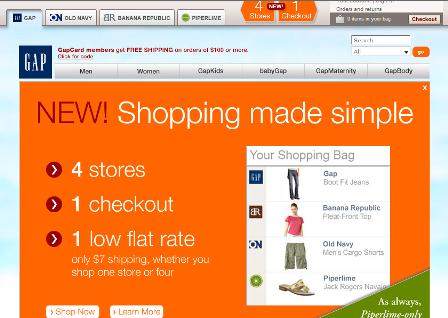
Prior to the change, only 25% of Gap.com's downstream traffic went to company's other brands (OldNavy.com, BananaRepublic.com and Piperlime.com). That percentage increased to 55% by the end of Aug. 2008.
The same analysis also showed that Gap.com's referral traffic from OldNavy.com, its sister brand was only 12% with little or no traffic from the other brands prior to its redesign. The same traffic from OldNavy.com jumped to 26%. Piperlime.com and BananaRepublic.com also became major sources of referral traffic for Gap.com. In the meantime, Google.com as a Gap.com referral traffic source was down from 10.1% to 8.6% while its downstream traffic to Google.com was also down from 6% to 3%. Gap.com's reliance on Google decreased reduced substantially. This means customers no longer use a "vehicle" to get to the Gap's online store. In short, Gap's smart design not only increased its sales, it also eased the burden on marketing staff's acquisition and retention efforts because its number of visitors and the time those visitors spend have substantially increased since then.
What is also very interesting in this story is that it has also been copied by the online newspaper industry, and this similar tactic paid off too.
Wall Street Journal Digital Network is taking a similar approach. Before AllthingsD.com, one of the network's vertical sites, synchronized its site header with WSJ.com in August 2008, only 5% of its downstream traffic went to WSJ.com. A Before-after analysis showed that right after the site header synchronization, there was a dramatic increase in its downstream traffic to WSJ.com -- 35%. The interpretation of this success is that AllthingsD.com visitors are tempted to click on the WSJ.com.com tab on the top of its site -- just for the sake of wanting to see what's going on at WSJ.com. More often than not, the convenience factors and the "a-ha" moments that delight users are the reasons behind a successful site.
It seems that brand optimization is a key issue for global companies at the moment. I believe this detailed story could nourish your thoughts if you are managing a global brand. What do you think about it.
Saturday, October 30, 2010
Fidéliser sans carte : L’exemple de Franprix
De plus en plus, les experts de la relation client et du CRM estiment qu’il est possible de concevoir un programme de fidélisation sans carte. Depuis la création des premiers programmes de fidélisation, notamment dans la distribution, la carte de fidélité était un must. Elle matérialisait la relation entre un consommateur et sa marque. De plus, l’objet avait une signification : il marquait l’ appartenance à une caste, celle des clients fidéles d’une marque valorisante.
C’est le cas de la carte Fnac. Les possesseurs de cette carte ont une haute estime de cette carte, car elle prouve une certaine culture.
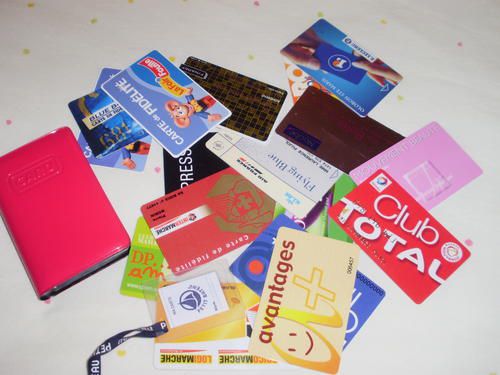
Mais avec la dématérialisation des programmes de marketing direct et du CRM en général, il est de moins en moins évidents que la carte de fidélité reste un outil indispensable dans son CRM. En effet, la première limite du concept est le nombre de carte de fidélité que porte un consommateur sur lui. En effet, en moyenne il en porte 5 sur lui. Au début de ce phénomène de mode, cela n’était pas un problème car peu d’acteurs avaient de carte, donc la concurrence pour rentrer dans le porte feuille du client était faible. Mais aujourd’hui la majorité des grandes enseignes possèdent leurs propres cartes, ce qui rend donc difficile la capacité du client à posséder beaucoup de cartes sur lui.
De plus, le problème de la fréquence intervient. Une enseigne alimentaire a plus de chance de faire partie des cartes retenus car la fréquence d’achat est élevé. Par contre, pour une marque tel que la « Fnac » par exemple, on l’utilise peut être trois fois dans l’année, mais avec des achats importants, ce qui ne nécessite pas de l’avoir à tout moment sur soit (exemple illustratif). Ce que j’essaie de démontrer, c’est que pour certaines marques, faire 3 achats dans l’année, c’est synonyme de clients fidèles, tandis que pour d’autres, le consommateur se déplace une fois par semaine.
Les smartphones peuvent répondre à ce problème. Dernièrement, j’ai vu des applications très intéressantes tels que Cardstar aux Etats-Unis et Fidall en France. L'idée n'est donc plus d'avoir des cartes physiques, mais des comptes fidélités virtuelles qui se retrouvent dans une seule et même application, facilement utilisable et toujours sur soi car dans un portable. Mais ce n'est peut être pas la seule manière de dématérialiser cette fidélisation.
Ainsi, le LSA du 14 octobre 2010 parle du système de fidélisation de Franprix via une boîte noire. Ainsi 10 magasins sont déjà équipés d’une black box en caisse, et ils devraient être près de 250 à la fin de 2011. Les consommateurs passant en caisse donnent leurs numéros de téléphone à la caissière, qui les rentre et grâce à ce boîtier les clients sont immédiatement reconnus et accumulent ainsi à chaque passage en caisse des points transformables ensuite en bons de réduction.
J’aime beaucoup ce système car il me rappelle ce que j’avais vu aux Etats-Unis chez Safeway. En effet, il y a plus de chance que le consommateur se souvienne de son numéro de protable qu’il n’ait sur lui sa carte de fidélité.
De plus, ce système permettrait aussi à des fournisseurs, n'ayant pas de contacts directs avec le client, de monter eux aussi des programmes CRM sans passer par le distributeur.
Je pense que ce type de système va se développer de plus en plus. Et vous, qu’en pensez vous ?
Friday, October 29, 2010
Some Thoughts About Suppliers CRM Strategies
I have seen this past few weeks a bunch of initiatives of brands which are creating their own customer relationship management program. Thanks to Internet and packaging communication, they aim to go around retailers in order to master their CRM directly.
Some of them set great programs. Indeed, large companies like Nestlé, P&G or Dannon can afford to develop this kind of programs. But in my opinion there are two downsides:
- Obviously, results are biased. Indeed, you may boost consumption thanks to vouchers, but you address yourself to a specific type of customer, which does not represent your actual customer base.
- By multiplying the number of customer relationship programs, you tend to find less efficiency.
Let’s take the example of the Coffee market (a very competitive one):
- Nestlé has recently launched a CRM program in Australia for its brand.
- Kraft has spend much effort in developing a e-CRM program, with a great Iphone app and interesting content.
- What about other competitors like Unilever, which has enough power to set a CRM program by their own?
- Also let’s not forget that you are not ONLY a coffee customer, but rather a food customer, which purchases at least a dozen other products meanwhile. Just to remaing concrete and simple, you may get tea, or hot chocolate instead of coffee.
This is the reason why I am wondering if those CRM programs will be able to exist by themselves. You may have a strong interaction with your customers as a coffee producer, but is it enough?
What I mean is that I believe a multi brand loyalty reward program would probably make more sense. It might be more convenient for several brands to join their effort and propose a program which would allow the customer to access all the vouchers they deserve. It will ease the process of coupon seeking. But it will also help to convince people to join these programs.
Some brands like Procter & Gamble or Unilever are already owning different brands for different purposes, and therefore could join all the business units in the same program. But also we may image third parties like Catalina trying to create this joint venture for the customers’ benefits.
What do you think about it?
Wednesday, October 27, 2010
Twitter To Be Added To Google News
Google news is a reliable source of information which gather all the different online information websites news, and rank them in order to have a clear news feed. I use it often, as it allows me to view quickly the most interesting headlines, and while I pick one, I have several valuable articles added to it.
The CEO of Google announced it will add a Twitter feature to Google News.
The feature adds a small box to the right-hand side of the page that allows users to login with their Twitter credentials and then “see when people you follow are talking about the news.” Search Engine Land even found a help page about the experiment. The description of the feature says that it will allow users to “find news articles that your friends are sharing on Twitter,” but notes that the new Friends section will only show articles that can be found in Google News.
It adds to Google News a social layer which is very interesting. Also, it is very interesting to see that Twitter is becoming a reliable source of information, as blogs became couple of years ago.
Tuesday, October 26, 2010
Facebook Creates The Future Of Video Advertising
The action is taking place during a party, and all the furnitures that compose the backstage are Ikea's products.
The downside is the information linked to the ad. Hence, if you click on a product, you go on a youtube video which only shows you a picture and the price of the item. I believe it would be smarter to have either the exhaustive production information page, or a video showing how to use the product.
Also, it remains difficult to select an item during the video. I have tried to click on some furnitures and I could not. But the potential remains very interesting.
Nevertheless, I believe the use of this online video is very smart.
Sunday, October 24, 2010
Etude sur l'usage des réseaux sociaux en France
Il est intéressant de voir dans le classement la présence de 2 sites français, comme quoi il reste de la place pour les sociétés nationales dans le web 2.0. Encore plus intéressant: où est Twitter?
Au global, plus de 20 millions (20,3 millions) d'internautes sont inscrits sur un site communautaire et plus de 8 millions s'y rendent quotidiennement. Les adeptes des sites communautaires sont toujours plus nombreux : en un an, leur population a augmenté de 4,2 millions de personnes. Sans grande surprise, ce sont les jeunes qui s'inscrivent le plus sur les sites communautaires. Les moins de 24 ans représentent plus du tiers des inscrits (36,9%) alors qu'ils représentent à peine plus de 25% (26,3%) des internautes.
Ce trimestre, les 11-15 ans font une poussée remarquée sur les sites communautaires avec une augmentation de 63% : ils sont plus de 2,1 millions de jeunes adeptes. Moins attendus, les 35-49 ans se font également une place de choix sur les sites communautaires. Ils sont 5 millions à être inscrits, soit 28% de plus en un an. 2010 voit également une plus grande féminisation des sites communautaires : 10 millions des internautes inscrits sont des femmes, soit 49% contre 46,5% en 2009. Des inscrits de plus en plus actifs Les inscrits à un site communautaire se connectent de plus en plus fréquemment : près de 4 sur 10 s'y rendent plus d'une fois par semaine.
Ils ne s'en tiennent pas uniquement à se connecter fréquemment, ils utilisent également les différentes fonctionnalités de ces sites : près de 4 millions de ces inscrits déclarent, par exemple, mettre à jour leur profil régulièrement. La répartition selon les différents réseaux sociaux s’établit de la manière suivante (un personne peut être membre de plusieurs réseaux sociaux) :
- Facebook : 16,6 millions
- Copain d'avant : 7,5 millions
- Youtube : 5,3 millions
- Dailymotion : 2,9 millions
- Trombi.com : 1,7 million
Des inscrits toujours plus en contact et toujours plus intéressés par les commentaires
Dans le peloton de tête des inscriptions aux sites communautaires, près de 8 sur 10 avancent la volonté de rester en contact avec des amis, suivi de près par le fait de reprendre contact avec d'anciennes connaissances (76%). Ces principales motivations sont les mêmes que l'an passé. Les inscrits sur des sites communautaires sont logiquement influencés par les commentaires, puisqu'il peut s'agir de ceux de leurs amis. Plus de la moitié d'entre eux (54%) lisent l'avis d'internautes pour préparer leur achat et 22% le font même systématiquement avant chaque achat, plus donc que les internautes en général (19%).Loin de s'en tenir là, ces inscrits poussent l'influence des commentaires jusqu'à déclarer pouvoir décider d'effectuer ou non un achat en raison d'un commentaire positif ou négatif d'un internaute sur un produit. Ainsi, près de 6,9 millions d'entre eux déclarent acheter un produit suite aux recommandations des internautes. A l'inverse, plus de 7,5 millions d'inscrits affirment pouvoir renoncer à un achat suite à des avis négatifs d'autres inscrits.
Saturday, October 23, 2010
Will Android Be The Microsoft Of the Iphone?
It is funny because it reminds me of what happened in the 80s while Apple owned the best computers and operating system, but Bill Gates has been able to enter its market and to dominate it in couple of years. Will the same thing happen to Android?
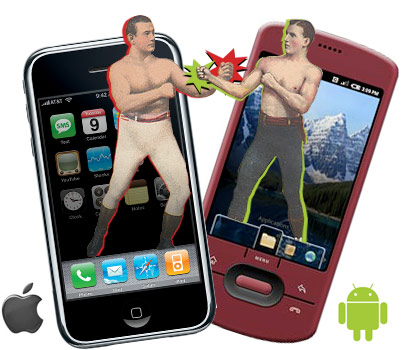
Microsoft has set its supremacy by promosing a way cheaper operating system which had the same kind of performance though, and to propose it to already large and existing hardware corporations. If you really think about it, what is going on with Android is somehow the same.
What do you think about it?
Friday, October 22, 2010
Ebay Launch Ebay Selling In The UK To Speed Up Sales Process
In the UK, the mobile application is used every two seconds to launch a new product for sales.
Thursday, October 21, 2010
Nestlé Decides To Create Its Own CRM Program
This is a great example of a customer relationship management program established by a supplier in order to get rid of the retailer’s mastery. Indeed, suppliers spend a lot of effort trying to retain customer loyalty, but they don’t have a direct link with customers. They must go through a retailer to get customers data and to be able to set efficient promotions.
More and more, thanks to vouchers and coupons, either distributed on pack or via Internet, they succeed in triggering sales from loyal customers. But the concept is biased, and online coupons are targeted to a very specific type of clientele.
This is the reason why Nespresso has such a strong CRM program: they master the whole distribution channel, which gives them an exhaustive picture of their customers. A highly valuable asset.
I have helped a friend of mine with the Shisheido reward program, which actually find it pretty well done (I don’t have inside data if it works or not though).
Nestlé, A Cup Of Rewards
When you purchase a pack, you log on the website, and type the code in. Then it gives you points, which allow you to pick a gift.
It reminds me of what Carrefour has implemented not so long ago. Thanks to its wide range of loyalty card holders, Carrefour has negotiated from external partners discounts. The idea is to go beyond rewards simply based on your products. Hence, Nestlé owns more than 65% of market share on the instant coffee market.
It is a very interesting idea. Now, I believe it is also very important to remain focused on your positioning, in order to propose some gifts which make sense. Now Internet gives a fantastic opportunity for suppliers to create their own customer relationship management program, and by it, to get some leverage out of the retailers, even though retailers' customer data base remain the best customer data available.
Wednesday, October 20, 2010
Don't Cut Your Advertizing Budget During Recession
A new study by Thinkvine analyzed the effects of turning off all advertising entirely for a year on one unnamed brand. It then studied the effects of turning it back on the next year at prior levels. Here’s what they found:
- For about 16 weeks, sales volume was about the same.
- By the end of year one, however, sales volume was about 20% lower without advertising than with it.
- Turning the advertising back on in year two, reversed the sales decline as the brand began growing again at the same rate before the advertising was stopped.
- However, the advertising was not able to close the gap in sales compared with what it would have achieved had it maintained media spending for both years.
Different brands respond differently to media cuts, but for many – getting back sales and share lost from cutting budgets can be a lengthy and an expensive process.
ThinkVine CEO, Damon Ragusa, said it best:
“The cost of getting back what you lose is often greater than the savings of not advertising.”
Of course, it is important to cut some of your budget as company is experiencing trouble. Nevertheless, keeping a high advertising pressures allow you to get a great start while the economical signs are back in the green. This study materialize the fact it is hard to build brand equity, and if you have built it, you may loose it fast. This is the reason why Coca Cola spends so much money in advertizing even though they have been for decades the highest equity in brands.
Tuesday, October 19, 2010
Ikea To Launch Customer to Customer (C2C) Activities In Sweden
Customer to customer activities is a lucrative activity on line. Ebay has experienced a huge success thanks to its activities. Priceminister in France is also doing good with a similar concept.
Facing this success retailers which sales are dropping are looking after this main consumer trend. In France, leading electronics and cultural products retailer Fnac has launched its second video game sales activities. If you are struggling to grow a market, you may get extra money from the second hand market.
Ikea has launched a new website reporting classified ads for Ikea products.
Peter Agnefäll explained that the reason which led to this decision is to make sure their products are used in a sustainable way on the long run.
Instead of blinding themselves, Ikea aknowledge that a secondary market exists where products are traded. And instead of trying to block it, they decided to help it.
Monday, October 18, 2010
Mobile Marketing Outperforming In Europe
Mobile communication is the closest it may get from the marketing one to one concept.
Research, commissioned by the Mobile Marketing Association (MMA) shows that, on average, 45% of European consumers noticed mobile advertising and of these, 29% responded to it. The research also showed that once people have responded to a mobile advert over a third (39%) continued on to make a purchase. These stats show well how interesting mobile advertizing will get.
German consumers who responded to mobile adverts emerged as the most likely to go on to make a purchase, at 49%, compared to 47% of UK and 22% of French consumers. Of the consumers that purchased products or services, 39% (47% UK, 49% Germany and 30% France) spent between 5 and 20 Euros or British Pounds.
The study asked respondents about their awareness, response and purchasing habits as a result of advertising delivered on mobile devices.
The report also found that in the UK and France, opted-in SMS advertising proved most effective at soliciting consumer response at 40% and 21% respectively. These figures are pretty high, even for opt in media. In Germany on the other hand, an advert delivered on a website accessed on a mobile device proved to be the most effective, with 27% of respondents stating banner adverts as preferable.
Mobile advertising that included time sensitive special offers or discounts was cited as the most important factor leading to a purchase (35% UK, 31% Germany and 27% France). Mobile coupons accessible from phones also proved to be highly popular (34% UK, 29% Germany and 24% France).
In terms of the types of products or services likely to lead to a purchase, content for mobile devices such as applications, music and games emerged as the most popular (23% UK, 28% France and 19% Germany).
Unsurprisingly, younger people emerged as the most likely to notice, respond and purchase content or products as a result of mobile advertising.
"The findings are extremely significant as they indicate a high awareness and efficacy of mobile advertising among European consumers," said Peter A. Johnson, vice president of market intelligence, MMA, and author of the study. "This latest research demonstrates that Europe's mobile consumers have transformed mobile advertising from last year's marketing prophecy into this year's required marketing practice. But getting mobile advertising right requires researching the unique opportunity offered by the different mobile media. For example, an advert delivered via the under-hyped opted-in SMS turns out to be the most likely to open a consumer's wallet."
"These findings are made even more interesting when viewed in conjunction with our previous research demonstrating that a quarter of Europeans were likely to respond to advertising if a mobile response mechanism was included," stated Ralph Risk, Lightspeed Research Marketing Director EMEA. "By delivering advertising directly into the hand of consumers, brands can engage consumers on the go, increasing the likelihood of interaction. The challenge for brands is to ensure that their adverts are relevant and allows consumers to easily respond"
Thursday, October 14, 2010
Amazon Launches A Facebook Store For Procter & Gamble
E commerce tycoon Amazon has set a joint venuture with Procter & Gamble to set their first Facebook store. Indeed P&G has a strong legitimacy on the baby care market, throught their Pampers brand. The Pampers’ Facebook page counts over 300 000 people, which are seeking for information and voucher on diapers and babies in general.
Amazon has created a new tab on the page, called “buy now”, which leads to a mini store where you will find Pampers products.
This is very interesting because the activity seems to be promise to blossom ov
Buying diapers via a P&G-owned Facebook page is only the beginning. Although Amazon spokeswoman Tracy Ogden told TechFlash that the company "wouldn't discuss future plans" when asked if Amazon would be powering more storefronts in the future, we imagine it will. Facebook now has half a billion users, and many of them have opted into relationships with companies, brands and products through the use Facebook likes. These are a company's best customers - the ones who are willing to watch the ads, share their opinions and check out the latest deals and discounts. It only goes to reason that they will buy the products, too.
Or so you would think. Interestingly enough, social commerce hasn't yet led to a large volume of sales, Forrester Research e-commerce analyst Brian Walker told TechFlash.
That broad statement seems to discount the successes some savvy brands have already seen leveraging social networks, though. Take Best Buy, for example. It, too, has an integrated shopping tab on its fan page. Only six weeks after its late 2009 launch, it helped the company grow its fan base from 27,000 users to 900,000 and sent traffic to its official website.
On a customer relationship management point of view, of course it makes sense. You allow loyal customer which have already embraced the brand to purchase right on Facebook. I am sure that the activity will boom soon.
Now it is difficult to see what kind of specificities a Facebook store should own.
And you what do you think about it?
Wednesday, October 13, 2010
Marks & Spencer Mobile Commerce Strategy
What is very interesting is that they have taken advantage of the new mobile commerce market to take the leadership over its competitors. Mobile commerce might be a niche, but it is called to strike within the next few years.
It is interesting to see how this company which failed in taking the Internet trend.
Marks & Spencer claims that to date the site has delivered results that outstripped its initial key performance indicators:
• 1.2 million unique visitors since launch
• More than 10 million page views
• More than 13,000 orders from the mobile site since launch
• £3,280 ($5,195 USD) for two sofas is the single largest value order
Step by stepConsultancy for the development of the mobile site between M&S and MIG, in conjunction with Usablenet, commenced in early April this year and took a phased approach.
Phase one was “Discovery and definition,” moving through to “Concept look and feel,” “Design refinement and approval” to “Making sure the site worked on multiple handsets.”
Throughout all phases, user experience, design and usability were core to the discussions.
Features on the site include a store finder to locate the nearest M&S outlet, the ability to search by product and then to refine these searches to a specific item.
The site features a full product range for categories such as Women’s, Men’s, Kids Clothing, Home and Furniture and Technology.
Ms. Veit said that for M&S the mobile commerce site is all about getting products quickly and easily to consumers via mobile and letting them pay for products on their mobile device.
M&S’s aim is to integrate mobile as a channel to stand alongside the PC Web, to increase basket size and drive sales.
The retailer has also incorporated a customer feedback facility to enable customer reviews, and it has given consumers their choice of delivery method.
The M&S mobile commerce site can be accessed via any Web-enabled phone, and the device will know to redirect the user to the mobile commerce site. Or users can manually type in http://m.marksandspencer.com/
To get the word out about the mobile site, M&S is using its online channels such as Facebook and Twitter, established M&S channels such as product catalogues and Your M&S magazine, its email and SMS databases and a mobile display ad campaign.
M&S customers are accustomed to shopping wherever they want, whenever they want.
“Even before we launched the mobile-optimized site, over 800,000 customers were already shopping with us on their mobile phones and we had over 600,000 customers opted-in to receive text-message updates and promotions from us,” Ms. Veit said.
“The average age of mobile phone customers on unlimited Web packages—no cost for surfing the Internet—is 33, which mirrors our core customer online and demand will only grow as smartphones become more commonplace,” she said. “And as traditional online retail matures, mobile is expected to become the growth area for Internet retailing.
“One in ten of all Internet pages viewed in the UK are viewed on a mobile device and the number of adults using the mobile Internet is expected to double in the next two years.”
You may visite the mobile website here.
Monday, October 11, 2010
Lorsque la marque est victime de son succès.
Certaines marques sont devenus de tels références que leur nom est synonyme de la catégorie auxquelles elles appartiennent.Ainsi, un frigidaire est synonyme de réfrigérateur. Plus récemment, un Ipod désigne d’une manière générique un balladeur mp3.
La marque a une valeur marchande importante. C’est par exemple le cas de la marque « Orange », que France télécom a racheté à prix d’or à une société de télécom britannique pour rajeunir son image de marque.
L’un des plus beaux exemples est celui de Sopalin, qui a inventé et démocratisé l’essuie tout. Cependant, cette marque est restée dormante pendant de nombreuses années, et aujourd’hui son usage par le détenteur des droits et remis en question.
En effet, un article de LSA explique qu’un texte de loi prévoit la déchéance d’un nom de marque si ce dernier est passé dans le langage commun. Pour le prouver, il faut que la marque n’ait pas suffisament protégé son nom. Cela signifie que le groupe à qui appartient la marque doit intenter des actions à l’encontre des utilisateurs à chaque fois qu’elle est mentionnée comme synonyme d’une catégorie de produits par un tiers dans un film, un livre ou sur une affiche. A la base, une marque n’évoque pas un produit, elle permet juste de le distinguer dans une catégorie.
Quand cette dernière tombe dans le langage commun, elle perd son caractère distinctif et n’est plus apte à identifier le produit pour lequel elle est associée. Si une marque est déchue de son nom, elle doit abandonner le monopole de cette appellation, qui peut donc être utilisée par les tiers.
Ainsi, cela peut être un force de devenir le référent de sa catégorie, mais il est tout aussi important d’être acteur de la défense de cette marque. Ainsi, Caddie® est un très bon exemple de marque proprement défendue.
Friday, October 08, 2010
Audio Enhanced Newspaper Ad
I found this very interesting video on a blog:
Thanks to this tool, you may add audio content to your newspaper ad. It of course makes your commercial stand out. Also, it could be pretty pricy. In this particular example, the brand is BMW, a premium car manufacturer, so the quality of the medium is related to the high standard of the brand.
Wednesday, October 06, 2010
Product Pages Are Key To Turn Prospects Into Customers
Tuesday, October 05, 2010
Suppliers Website To Have Key Roles In Buying Process
Suppliers, especially electronics brands have a strong impact in customers decision making process.
According to studies, 9% of online shoppers log on manufacturer to research information on products (+6% compared to last year).
Hence it implies 2 very important focus:
- Provide as much information as possible on your information. It should be extensive technical information, video, questions and answer features, customers comments… It is important to remain a reliable source of information, and also to become the leader in the market in terms of information. And I believe it would go through social media and community management, as you may become a great information place.
- Provide information about where to buy. It implies to set partnership with retailers to have information about where stores are located and the stock status. Also, I believe it would be a great idea to add a price comparator on the website by setting a partnership with a leader in the market. Also, it could become a revenue stream as you may get paid by offering a spot on your website.
Monday, October 04, 2010
Best Buy To Emphasize Its Multi Channel Solutions
It is common for electronics retailers to have both a brick & mortar presence while owning a e commerce website. Nevertheless, most of the time, it is hard to make both entities coexist. Especially while a brick & mortar company is entering the e commerce sphere.
Best Buy has been able to make the best out of it, and for this new holiday season, it is going a step further. Best Buy is planning on improving its “buying on line, picking up in store” option. The product will be available in store 45 minutes after it has been purchased on the website.
Implementing such a concept requires perfect mastery of the stocks and supply chain. It implies Best Buy will be able to have an accurate knowledge of store’s stocks, warehouse ones and logistics schedule.
Prior to Best Buy, Circuit City had released the 24 minutes guarantee, shortly before filing for bankruptcy (I don’t know if there is any link between both statements).
A new idea is also the fact they’ll let customer pick up their goods right from the warehouse! Once again, this idea implies to design desks in the warehouse.
The idea is smart and great. They are making the best out of multichannel retailing. I believe that some French retailers should think about it.
Saturday, October 02, 2010
Online RetailersInterested In Facebook Virtual Money
Some brick & mortar retailers are already selling Facebook credits in their stores, thanks to gift cards, but some online retailers are also very interested by this new money. Hence, some companies like 1800 flowers in the US is already generating substantial revenues thanks to their Facebook page.
Actually, online retailers are thinking about using Facebook credits as incentives for their loyalty reward programs. This is smart to leverage the great potential of Facebook in terms of customer relationship management. Hence, instead of giving actual cash back, they can give credits for their Facebook contacts.
As a real community, Facebook has added a money, which will also help Facebook to retain their users. It is very interesting to see how people will adopt this new feature. Especially, it will be great to see the versatility of Facebook credits, meaning the range of products or service you may acquire with it.
Friday, October 01, 2010
Google Impressed By Twitter’s Results
You may know how skeptical I am about Twitter’s strategy: not to worry about revenues, but focus on growth. Of course it is important to have the largest number of users to get the largest audience as possible. I believe it is important though to think fast how to get the platform profitable to secure revenues and hence long term growth (even if it affects the user growth).
However, Twitter is right now impressive. In the very same article you will learn that Twitter has passed My Space in terms of users. While MySpace audience is falling by 17% (which shows how sad it is for a social media company which is already decreasing), whereas Twitter gained 76% in the same time.
As Eric Schmidt say, of course that thanks to Twitter’s concept combined with the number of users it has, monetization potential is phenomenal. But it needs to become true. Twitter has already launched several potential revenue streams, as the promoted tweets feature, which is already experiencing great success, but some others haven’t the same results. The early bird initiative, a Twitter account which was proposing some discounts and special offers to its followers, have been abandoned fast.
Twitter reached 160 million users around the world, which is a security. Now I really hope Twitter is going to start generating high revenues.