Friday, October 25, 2013

The Important Skills For Analytics

A quick note that have been inspired by a tweet of @kelloggschool about the most important skill in data analytics


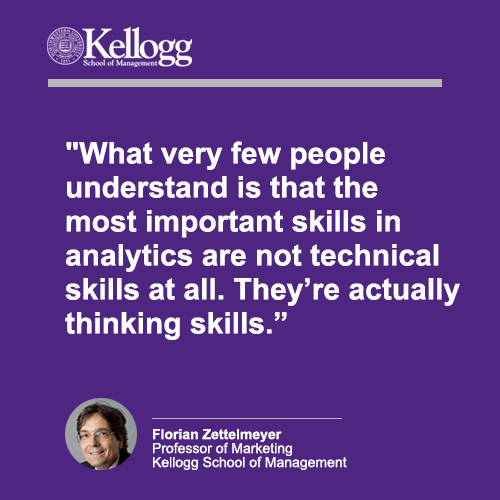
"What very few people understand is that the most important skills in analytics are not technical skills at all. They're actually thinking skills".

I am 100% agree with this statement. Indeed, I believe that what really matters once analyzing data is the ability to understand the origins of the data, and to translate it into simple and operational decisions.
I always take a lot of times to understand the history, the origins of the data: Why did the sale falls? Was the previous data too high, hyped du to extrordinary events? Or because something went wrong in store? A shut down of the web page? Data alone, even if pure, well brought, and the proper one, does not mean much. It is therefore always important to correlate it to actual concrete stuffs.

And then, what is interesting, it is always to make decisions on it. Being able from complex data to bring a clear view of what needs to be undertaken to maintain good figures or to turn around one situation.

I am currently reading the book of former TESCO's CEO Terry Leahy in his book "Management in 10 Words". One of them is "simplicity". During this chapter, he emphasizes on the difficulty of making simple decisions to solve complex problems. Nowadays, with the Big Data, the information overload, most of things seems to be complexed, and most of the time, we tend to look for complex solutions to these complex problems. One of the key factore of success of management is to simplify decisions, in order to have them well applied by the staff. 

Same things with analytics, it is not because you have complex analytics that you should have complex reports, and complex actions linked to them.


Tuesday, October 22, 2013

Articles About Customers' Behavior During Sales Periods


Sales season, or promotional campaigns are a very important part of your marketing strategy. In terms of customer relationship management, actually, we use a lot of techniques in order to have targeted ads with targeted discounts in order to optimize promotional budgets. But when it comes to sales, you are in a totally different area, as you have massive discounts for any people who gets in your store. Nevertheless, as most of retails own a substential part of its sales made during those kind of periods, these events should be taken into account in your customer relationship management strategy.

French Magazine Challenges has interviewed French expert in economical behaviors Mickaël Mangot about how customer's behavior may change during sales periods.

Customers behavior during these sales are based on two platforms:
  • Rarity: The stock avaible + the high level of discount + the short period of time, drive the urge to get the products. We desire things more when they are rare.
  • Social competition: During the sales period, brand products are affordable to most people which creates the will to go up the social scale. We want to get as much products to own more things than our peers.
There are two main tactics used by retailers to succeed during these sales.
  • Showing off the original labelled price: The customer tends to pay more attention to the discount level than the actual price after the discount. By maximizing and showing the discount, retailers raise its chances of selling.
  • Advertizing big discounts in order to attract customers into its stores, and then having lower discounts inside store. The big discounted products are available with low stocks. If the customer don't find what it needs, it will have a high probability to buy another product with a lower discount.
There are two important kinds of utility for a customer during sales hunt:
  • The utility of the experience: What utility you get from the things you buy.
  • The transaction: Most of the time, this experience is the one with the most emphasize during sales. 

Sales are a very important part of a relationship between a retailer and a customer, and you should pay attention to the experience you provide to your customers during this period.


Monday, October 14, 2013

Leshop: The Most Successful Grocery E-Retailer In The World


I wanted to writte an article about a company I already wrote about, which is a great success on line, Swiss company Le Shop.  In the booming e-commerce, most companies which experience great success sell either cultural goods that can be easilly dematerialize, or companies that sell hardware and electronics. 


But in the world, it is very rare to see food retailers being able to run a profitable business. A lot of companies are looming on the potential, such as Amazon, but even though the business is not that old, some companies have already filed for bankrupcy, like French e-retailer telemarket.fr. 

The calcul is simple: If on average e-commerce can counts in the end for about 30% of the overall commerce, the growth margin is very high, as I don't know any countries where grocery e-retailing has a market share higher than 10%.


Le Shop is one of them. Founded in 1997, the company struggled in its debut, but was able to go through the Internet bubble of the early 2000s. In 2003, the company set a strategic partnership with Swiss leading company Migros, which allowed them to get the buying terms and the private label catalog. 

In 2013 the company:
  • Generates 31% of its sales on smartphones and tablets
  • Sales for 122 M€
  • Counts for 0,8% of market shares.
  • Is profitable.
Of course, the Swiss market may not be the most aggressive in terms of pricing, but Le Shop, thanks to its trailblazer mindset, has been able to develop a good business. Also, Switzerland is probably a great country, as the equipment in smartphones and tablets is probably higher than the world average. There are though probably a lot to learn for competitors in order to launch their business online.


Wednesday, October 02, 2013

La dématérialisation des programmes de fidélité


Je souhaitais relayé un excellent article que j'ai lu sur le magasin professionnel LSA du 26 septembre au sujet des programmes de fidélité dématérialisés. En effet, les smartphones et les nouvelles technologies ont énormément fait bouger les programmes de fidélité, aussi bien d'un point de vue du support, mais aussi des mécaniques commerciales. Vertone IAE et Comscore font un état de la fidélisation en France en 2013:
  • 58% des français ont entre 3 et 10 cartes de fidélité.
  • 66% : taux de pénétration des programmes de fidélité en grande surface alimentaire.
  • 50% des acteurs de la distribution alimentaire et 30% des acteurs de la distribution non alimentaire ont dématérialisé leur carte de fidélité sur mobile. A savoir (pour être dans le milieu) que cette dématérialisation qui semble très simple pour le consommateur, est en fait très compliqué car souvent, les caisses de ces distributeurs ne sont pas faites technologiquement pour lire des codes barres sur des écrans de portable. Mais les nouvelles caisses maintenant les prennent en compte.
  • +100% de programmes fidélité téléchargés en 2013. 27% des possesseurs de smartphones, soit 15 % de la population totale ont leurs programmes de fidélité sur portable vs 7% en 2012.
Il existe 4 grands types d'applications portable relayant les programmes de fidélité:
  • Les portes cartes, permettant l'accès facile et rapide au 3 à 10 cartes que le clients possèdent, et donc d'augmenter les chances que le consommateur utilise celui-ci.
  • La ludification: Proposer des récompenses liées à l'utilisation de l'application. Cela peut être en scannant des produits sur le point de vente, en faisant des commentaires et donc en interagissant avec l'enseigne, ou encore en "likant" la marque.
  • Le service omnicanal: Il permet de pouvoir proposer du service et du conseil à valeur ajoutée au consommateur, ce qui est très bénéfique sur des produits à forte customization, tel que les produits cosmetiques ou techniques.
  • Les porte monnaies: Une utilisation simple, qui permet d'avoir accès à des réductions. 
Il est très souvent difficile d'avoir une seule application qui regroupent l'intégralité de ces services. D'ailleurs, je pense qu'il y a certainement pas mal de place pour des entreprises qui souhaiteraient regrouper pour plusieurs enseignes un même service, type commentaires consommateurs, ou bien un porte monnaie électronique multi enseignes et multi produits.

Il y a encore pas mal de chemin à faire pour les applications mobiles dans le cadre de la fidélisation, car pour l'instant on reste sur une utilisation historique de programmes déjà établit, et très peu de nouveaux concepts de fidélisation ont émergé de ces nouvelles technologies. Je me souviens à un moment de Franprix qui avait fait des expérimentations d'un programme de fidélisation 100% mobile il y a déjà 4 ans, mais qui manifestement n'a pas vraiment marché.

Il y a un point dans la ludification qui pour mois a aussi un très grand avenir et un très grand intérêt pour les distributeurs, c'est pour les applications de géolocalisation, type foursquare. J'espère que Foursquare sera capable de passer un niveau, et de devenir un réel "annuaire mobile de géolocalisation", car cela sera un outil parfait pour les enseignes de générer du traffic en magasin.

Tuesday, October 01, 2013

Concours vidéo du Cercle du Marketing Direct

Une deuxième publicité au sujet de ma lecture récente du blog de mon ami Henri Kaufman. En effet, en plus d'avoir été directeur d'agence de communication, auteur du livre sur la Créativité, il est aussi actuellement le co-président du Cercle du Marketing Direct, l'une des instances les plus connues au sujet du marketing ciblé. 

Le Cercle du marketing direct vient de lancer un grand concours vidéo pour les jeunes professionnels de moins de 30 ans, afin qu'ils réalisent une vidéo de moins de 30 secondes avec pour objectif de nous montrer leurs vision du commerce dans 30 ans.

J'invite toute personne intéressée de s'inscrire, en vous souhaitant bonne chance.


La Créative Attitude par Henri Kaufman, éditions Kawa

Je souhaitais faire un peu de publicité (en français, une fois n'est pas coutume) pour la parution du nouveau livre d'Henri Kaufman sur "La Créative Attitude". 

Henri Kaufman est l'une des personnes les plus brillantes que je connaisse. Je l'ai rencontré lors de mes études à Paris Dauphine, il était alors mon professeur, et m'a éclairé à l'utilisation des réseaux sociaux, et notamment du blog. Je pense que sans lui, je n'aurai jamais réussi à développer autant ce blog, car il m'a permis de bien prendre conscience de tout le potentiel de l'outil (il y a près de 5 ans déjà). Henri fut directeur d'agence de communication, et est un spécialiste du marketing direct, et bien sûr du marketing digital. 

Extrèmement créatif, il a décidé de partager ses recettes miracles dans ce nouveau livre, afin d'aider ceux qui se considèrent non créatif, ou bien ceux qui ont du mal à trouver des idées, à développer les aptitudes et environnements qui vont favoriser l'émergence de ces idées. 

Je souhaite un grand succès à ce livre, en espérant qu'il vous aidera à trouver de nouvelles idées, mais surtout à les appliquer.

Thursday, September 12, 2013

Is There A Future For Electronic Goods Retailing? Some Of My Thoughts


I recently read an article about the good health of Best Buy's Stocks. Surprisingly, even though the competition with online retailer becomes tougher and tougher, Best Buy succeded in delivering promising results. The question that this article ask, and the same that I ask to @tbayart , was if brick and mortard electronic goods retailer still have a future. 

Indeed, in this specific field, the competition of the Internet is very important. Most of the traditional store chains are not able to compete with prices, and the showrooming hype makes it even worse. The margin rates are historically low, and the price competition with online retailers which don't have the real estate cost makes it even tougher!

Some people even believe that traditionnal retailers are condamned to shut down eventually. Actually, I do not really agree with this version.

I may look like a trailblazer, but I have envision what is going on right now almost ten years ago: the show rooming trend. But at this time, I did not picture it as a bad thing, but actually a great opportunity to improve customer relationship, and the added value of the retailer. Here is sort of what I saw:

  • Stores would have very low stocks as people would tend more to buy goods to be delivered home.
  • There would be no cash desks, people would buy with cards and have automatic cash desks, which would lower the cost of cashing in.
  • There would be fewer products, to simplify customers' choices, but they would be presented in a manner that customers would be able to test them.
Of course, my vision now would have changed a little bit. Because the world has evolved a lot (at this time I could not see how mobile devices would change the world, nor what the competition landscape would have been), and also because I gained experience and expertise about retailing and marketing.

But I still believe there is a lot of room for brick & mortar retailers. And the main reason is that those kind of products requires a long decision making process, a high implication due to the cost, and a great knowledge of the products due to their complexities.

So I still believe there is room to develop a profitable business modell, which would actually be based on the showrooming trend which most of experts blame.

  • Maybe there would be less stores, and further from downtown: Maybe like Ikea with a big surface, which would help to show out the products.
  • Maybe there would be no stocks, or actually like ikea, on the opposite, there would be no warehouses the stocks being in the store.
  • People would buy on their sell phone their products, which would lower the cash desk cost.
  • Maybe there would be lower inventory (I believe that the market becoming mature, the product ranges start to be cut, which is a good thing), which will lower the cost of inventory.
I may not have all the information needed to develop the whole concept, but trust me, there is room.

Wednesday, September 11, 2013

Apple's Low Cost Strategy To Enter Emerging Markets

Apple launched yesterday its new Iphone range, composed by 2 devices: One enhanced version, with a better processor, and new features, and one low cost, which is sort of the same than the previous version.

I believe there are two goals in the fact that Apple launch a low cost device:
  1. Being able to compete on the second hand market: Apple can propose an old version new at a good price. Now that the smartphone markets become mature, the second hand market starts to count in the overal smartphone market, therefore there is room for growth on it. This is what Renault made in the car market by launching the low cost brand Dacia, with a certain success.
  2. Being able to compete in the emerging markets, where smartphone prices tends to be lower. This is the reason why its competitors excell, and take some market shares to Apple.
This is the second point I would like to discuss. Indeed, emering markets are very important for global companies as it is where growth is. The goal in this market is to set a presence that will secure a big market share, if possible a leading position, in order to generate long term profitability once the market matures.

But Apple have a dilemma: Indeed, even though they are not a luxury brand, they have a luxury branding strategy. And by trying to have an accessible price, they may alter this strategy. I believe they must have struggled with this move. And probably this is the reason why they have picked a targeted price of 500$ which is actually very close to the standard price of 600$.

But Apple must be able to get competitive in terms of pricing in order to generate new customers. Because if they don't they may not be able to compete soon with the other manufacturers like Samsung.

What do you think about it?


Friday, August 16, 2013

Category Management Series: Considering Inventory As An Asset (Inspired by The Ikea Edge)


One new post in the category management series, linked to my reading of Anders Dahlvig book. Ikea has based its success on low pricing. But more than buying cheaper than the competition, one of the key component of this low price strategy is the mastery of supply chain and inventory. 

Most of retailers consider inventory as a liability. Indeed, a high inventory leads to decreasing the cash flow. Cash flow is important in the retail business. A positive cashflow, allowed by buying products with 30 to 60 days to a supplier and selling the merchandises in 5 to 10 days, allow the retailer to invest in opening new stores or new activities. Owning a high inventory is therefore considered as a bargain.


But rather than that, Ikea believes that Inventory is an asset. Having a high inventory allows your store to minimize the stock out situations, and then maximizes your sales. Low inventory leads to low stock in store, and hence you miss some sales. Ikea's main goal remain the sales.

Here is an example of how low inventory management has a bad impact on sales and the overal performance of one retailer: Most of retailers deliver its results at the end of the fiscal year, on december, 31st. Hence, most retailers tend to order as less as possible, to get as low stocks as possible. But the end of the year is a very important time of the year for a retailer, a period where retailers make most of their sales. By giving too much importance to low inventory, one retailer may miss some important sales.


Also, one more thing: Instead of trying to pay its supplier as far as possible, Ikea would rather pay their supplier on time. Indeed, paying suppliers far allows the retailer to play with its positive cashflow. But Ikea think differently: By paying its supplier on time, the supplier has less financing issues with its cashflow, which allows Ikea to gets better buying conditions, and then lower the cost of its inventory (because they get better conditions).

I believe it is a very unique way to consider inventory, but what I like about this philosophy is to always prefer stock availability than low stocks, because sales must always be the main and primarly goal of one retailer.

Wednesday, August 14, 2013

The Ikea Edge: The Best Gears Don't Make The Best Cars

I wanted to share with you in my series about Anders Dahlvig's book his thought about management and team work. It has been based on a quote of Russel Ackoff, a trailblazer in management sciences.

Let's imagine you gather all the best cars in the world in one single room. Then you pick the best gears of each modells: The best engine, the best wheel, the best breaks... In the end, you get all what you need in order to build a car, with all the pieces you need. The question is: If you put it all together, would you have the best car in the world? Would you at least have a car that would move forward? Maybe not. The fact that each part works well individually does not mean that it would work all together. Success comes from the ability to work together. That is what makes the best car.

I believe it is very important to understand this part. I am totally agree with this quote. How many times a pro sport team build up dream teams on the paper but those teams never work together.
One example that comes up in my mind is the Lakers team of the 2000s with O'Neal, Bryant, Payton, Malone. All of these guys were all of famers, and despite a really will to work together, that did not happen the way they wanted and they failed in the finals.

Human interactions are key in business, with partners (suppliers, clients, investors), but also with employees, wether they work directly together or not. Great lessons, and great story to tell.

Monday, August 12, 2013

Category Management Series: Managing The Product Range And Its Consequences Inspired By The Ikea Edge From Anders Dahlvig

The first blog post I wanted to share about my reading of Anders Dahlvig's book The Ikea edge is actually linked to category management. Indeed, as a category manager, we are responsible of the listing and unlisting of products, and therefore, we need to master the width of one product range.

Most of the time, category manager tends to look after the largest product range. Indeed, owning the largest listing allows your category to become a leader in its trade: The more you have products, the more customers will consider your category as performing. Also, the larger the product range, the larger the sales, as you cover the most customer needs.

But as a category manager, it is also important to always understand what impact having a large range also implies:
  • High inventory,
  • Larger stores to show out your range
  • High wadges due to the manutention cost to put products on shelves.
Ikea is for sure the definition of a hard discounter, or a low cost company as you like. Anders Dahlvig's philosophy is: while choosing between a large product range and supply chain/ operationnal efficiency, Ikea will always choose operationnal efficiency.

As Dahlvig says, Ikea has a target of 2 500 products in its listing. Ikea, thanks to its concept and the attraction of its store, could sell almost anything, and has a lot of great products that supplier show them all the time. But because of their eagerness to get high efficiency on the operationnal point of view, they always keep their 2 500 products threshold. Keeping a short product range allows Ikea to keep low prices because they master their retailing costs.

Should you apply this rule to any kind of retail? Of course not! Amazon's goal is to get as much products as they can, because their business modell is much different than a hard discounter. But when thinking about category management, it is important to always keep in mind the cost of one new product in the range is.


In the Category Management Series:

Sunday, August 11, 2013

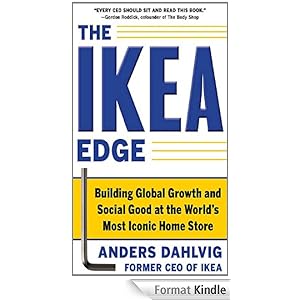
Book Review: Anders Dahlvig The Ikea Edge


I have juste finished reading the excellent book of Anders Dahlvig about Ikea's success story. Anders Dahlvig has been the CEO of Ikea for 10 years, between 1999 and 2009, but more than that has spent about his whole career at Ikea, working in different business units of the group. Hence, rather than telling the story of how Ikea has grown, Anders Dahlvig analyzes what makes Ikea a remarkable success story.

This book has really inspired me as a retail professionnal. Indeed, Ikea has great ideas on how to run a retail business, and some of them are quite different from how retailers usually think. This book has so many great ideas, that I decided to make a series of posts instead of one, in order to analyze the favorite parts I have from the books.

Why you should read this book:
  • The Story of Ikea: Even though it is not the sole purpose of the book, you learn a lot of details on the key dates, but also how and why Ikea grew the way it did.
  • The retail strategy: there are great ideas that retail businessmen should read carefully, in order to understand very specific parts of Ikea's success. I will write couple of notes about them.
  • The management style: Beyond retail parts, Ikea has a management styles that have thrived throughout the years. It could be very inspiring.
  • Understanding how to settle in new markets: Dahlvig tells us about how happened the launch of new business units in new markets. It is important to know for companies that wants to go abroad.

Wednesday, August 07, 2013

The Recency Theory

I was going through my saved favorite tweets on my account @schriver and I found this article about the "recency theory".  

Maybe the term "theory" may be too much about this concept but I believe it is interesting: In order to be efficient in your advertizing, it is important to focus on the time when your customers may most likely be making their decision.

For example, it is no use to have a commercial about a pizza at 9 am, because people will tend to forget about the commercial once lunch times come. Instead, having the right mobile coupon ringing around 11:30 AM will have a high change to trigger the sale.

In nowadays society, we are all overwhelmed with advertizing overload. Basically everything and anything is an advertizing medium: TV, websites, radio, smartphones, billboards, newspaper you read... It implies people can't keep in mind for long a commercial, and therefore, they must be able to make a decision out of it quickly.

Thanks to new technologies, it is now easier to communicate with one customer when he is in his decision making process. It is very important to be efficient in this timing in order to get customers' responses rate high.

Monday, August 05, 2013

Some Thoughts About Facebook Graph Search


Earlier this summer Facebook launched on a larger scale its new search engine called Graph Search. Search Engine is a very strategic tool in the online advertizing business. Indeed, most of the advertizing revenues Google get is from its search engine activities. And as Facebook owns a large number of users, it is important they leverage this base in order to get revenues. This is the reason why they have launched their own branded search engine.

I believe it was very important for Facebook to own their search engine. After having seen the Bing experience with Yahoo, I am convinced it is better to own the search engine in order to maximize revenue. Now, you also need to have a powerful and efficient search engine, especially while comparing to Google excellent system. 

Facebook took an innovative approach, trying to focus on its main strength, the social links its users have with each others. That is the reason why Graph Search has been designed that way.

The problem is that a lot of people raised the confidentiality issues that Graph Search will bring on the table. I understand that issue, but once again, Facebook also need to leverage the data it has in order to improve its users experience. I believe that people using Facebook are now well aware of the confidentiality problems that may occur.

I have not really used Facebook Search yet, so it is difficult for me to talk a lot about it. But I really wonder if people will actually use Graph Search a lot. 

What do you think about it?


Wednesday, July 31, 2013

Category Management Series: The Pricing


One of the key elements of a category management strategy is the pricing aspect of it. The topic is very large, because there are almost as many price strategy that there are companies...

There are different key aspects though to take into consideration in order to set a pricing. These aspects are not ranked! Because once again, depending of the global strategy of a company you may use one component more than the other:
  • Companies costs and margins: Obviously, if you are running a business, it is not for free, and you need to earn money. Therefore it is important to understand how much money you will spend once selling one product, in order to have a price that will secure you some profits.
  • Competition: Of course, you will always been in a competitive environment. Maybe you are the "Apple" of your sector, or with very innovative products, you will always need to find products that have the same usage that may be an indirect competition.
  • The facial value of your product/service: Customers may have an idea of how much money they may put in your products. This facial value may come from the money you allow your customer to save, or the time you will save, or the comfort you will provide. It is important to see how much money your customer is eager to spend on your products.
For a retailer, and most companies with wide product ranges, there is also a very key component of the pricing strategy: The equalization. The equalization process comes directly from the important competition you have in the retail business. Therefore, your pricing strategy is one of the key reasons why your customer will choose your store rather than another. Your equalization process obviously needs to get customers perception that you are cheap, but also needs to take care of the three aspects of the pricing above. 


In the Category Management Series: 

Monday, July 29, 2013

Publicis & Ovicom Joins Forces To Create Advertizing Tycoon

I learned this morning that French advertizing company Publicis has decided to create a holding with American group Omnicom.  The group is going to be a holding with headquarters in Holland (??? Probably for taxes reasons) with operations main office in the US and France. The new holding will become the largest group of advertizing in the world.

The merger is supposed to allow both companies to save money on expenses, and also to create different synergies. Now is it a good thing?

This is a question I don't really know actually... Indeed, some clients may be reluctant to remain in an agency for example that deals with their competitor, so I believe that they may loose some clients due to that. I actually believe that maybe the new group will need to sell some of their agencies due to that reason.

Also, I believe that where the group may create the best added value is about its consulting activities, rather than their power of purchase. Media companies are struggling financially, and I don't think they are in the capacity of providing better pricing due to the fact those both companies will buy together.

Now I am very happy for Publicis. I believe that Publicis did a great job and had the good strategy for years now. They have been able to shift from traditional media to digital with success. It is always great to see a French company succeeding as much as Publicis does.

Friday, July 26, 2013

Tesco's Talking Shop Blog

I recently discovered the Tesco Talking Shop Blog thanks to an article of French magazine Linéaires. Tesco is one of the leading retailer in the world, thanks to its leadership in England and different other countries. Tesco has also been rewarded thanks to its customer centric approach, and the usage they make from their loyalty reward program data.

In this blog, top executives of the company discusses about their job, they're philosophy, and what the innovations are at Tesco. It is a great source of information in order to know what the company is at.

As a professional of retail, it is a great opportunity to understand better what makes Tesco so unique. I invite you to have a look if you have the change.

Thursday, July 25, 2013

Should Businesses Experiment? thanks to @ariegoldshlager

I wanted to share with you my thoughts about an article I read on the blog of @ariegoldshlager : Why Businesses Don't Experiment. Actually, I found this article very interesting, because it is true: From my personnal experience, I believe that companies tend not to test much. Most of the time, they would rather change their whole business at once than to conduct tests.

The thing is that testing is difficult, and requires you to have clear patterns and protocol to respect, in order to have usable data at the end of the test period. Testing is not only about launching a new product and letting a few sample of people try it, it is about targeting the right sample to use, and to define right from the beginning the data that will provide you a clear answer.

As Arie points out, companies would rather have consultant letting them know what to do with their core business and take their advises for granted than taking couple of months to figure out what the decision will imply.

Now I believe that once you want to make a decision either to experiment something or to set it on a larger scale, you should think about those two things:
  • Experimentation is a great way to apprehend the impact one decision will have on the different component of one business, and then you would be able to correct it, in order to provide the best service to your customers once you make it on a larger scale.
  • Experimentation takes time, and in nowadays society, in tough economy and tough competition, being fast is one of the key element of success.
I may not give a clear answer to this situation, but I believe that before skipping an experimentation process, you should deeply look after it, in order to know what would imply a testing period, how to do it, and then make a decision either to experiment or not.

Wednesday, July 24, 2013

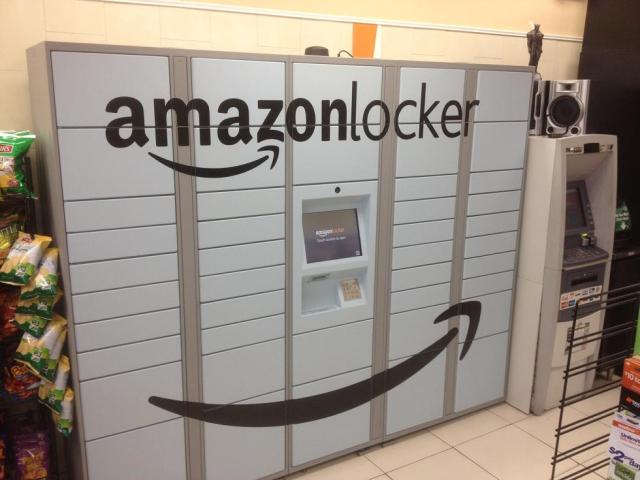
Walmart To Set Lockers In Store For Online Deliveries

In Store delivery is probably the biggest challenge for online business. Indeed, E-commerce is still growing, but its growth pace has slowed down a lot lately. The share of retailing made on the Internet is becoming steady, which is a good and a bad sign:
  • A good sign because it shows that online business is durable and counts for an important share of the overall retailing
  • A bad sign for retailing because most of the growth of retail was based on online activities.


I believe that there is a great opportunity for growth for online retailer thanks to this system:
  • They benefit from new delivery places. In the case of Walmart, in a highly visited place.
  • They can optimize their supply chain by delivering large quantities of goods in one single place, cutting the cost of the last mile (which is very expensive).
  • The system is quite cheap (even though I don't know the fees Walmart may apply to the online retailer, in the caze of Amazon's locker for instance).
  • They can skip the problem of deliveries that unsatisfy a lot of online customers. Who has never had a problem of a product that never came, or late, or had to call the post office to know where the mail has been shipped... This system I believe is more secure.
Thanks to this system, I believe that Walmart.com will get more exposure, and a competitive advantage. It is a very easy way to leverage the store network available in order to get market share online.


Tuesday, July 23, 2013

Amazon's Strategic Plan By Entering The Online Grocery Business


I read several articles on the web lately about Amazon's strategy to enter the Grocery Retail Market. I actually already wrote a blog post not so long ago about Amazon expanding their Amazon Fresh concept to new cities. Forbes.com has an interesting theory about these investment: Amazon is aiming to propose same-day delivery thanks to its ability to sell fast moving goods. Indeed, selling groceries, especially fresh products, imply Amazon to set up a supply chain allowing fresh products like fruits or meat to stay for the shortest period of time in warehouses, but also to deliver them with short notice.

Amazon is not looking for high margin rates, especially because grocery already works with razor thin ones:
“No one has cracked the nut of grocery home delivery in the U.S.,” wrotePaula Rosenblum, managing partner, RSR Research in a recent RetailWire online discussion. “The low margin nature of the business, coupled with the need for fuel-guzzling refrigerated vans and trucks, make it very hard to do — and that’s in ‘easy’ cities, which means relatively new homes, no five floor walk-ups or winding stairways.”


Mr. Heckman added, “It could also mean that delivery fees are lower, order size minimums are waived, and it certainly could mean that home delivery and in-store pick up will never pay out using traditional metrics and full allocated costs.”

Amazon has already started in France to sell fast moving goods, but mostly the pricy ones, with slow frequency of purchases: baby food and diapers for example.

What is interesting with this strategy, is that it somehow looks like a revert strategy of what hypermarkets have thrived on for years. Hypermarkets proposed non grocery products at discounted prices in order to attract foot visits for customers eager to find great deals, and then to sell food, which is where their core business were.

But now, Amazon wants to do the opposite: Attract people with grocery food, thanks to the home delivery service they can set up, in order to sell more of their core business item.


Friday, July 19, 2013

Sales representative/Store Staff are the best people for your customer relationship management effort

A very quick note to share with you this story: http://www.loyalty-ip.com/article-123-exceptional-cx-creates-brand-engagement?utm_content=buffer299e4&utm_source=buffer&utm_medium=twitter&utm_campaign=Buffer

I believe you should pay attention to it. So many times I have emphasized in this blog that the best medium of your CRM strategy is the people directly in contact with your client. This story is just a great example. Beyond the big data, beyond the technology, human contact remains special, when it is carefully handled.

Thursday, July 18, 2013

Why Mobile Commerce Should Not Be Taken Individually

Very interesting article of chainstoreage.com about mobile commerce ROI. Actually, the comment sounds familliar as mobile commerce is in the very same situation than traditionnal retail once e-commerce appeared.

When E-commerce started to spring up, a lot of people thought that traditionnal retailer would have a great competitive advantage as they owned store with high traffic to propose delivery and added value to online shopping. But one of the reason why it did not work that well at first was the way retailer was seeing the online store of the company: It was stealing some business from them, and on top of that they had to deal with the dirty work: after sales service, returns of non working products, the cost of stocks when people did not come to pick up their goods.

For mobile commerce it is even more true. Mobile commerce is 100% part of a ubiquitous shopper. One shopper may use its mobile added to different kind of channels, such as traditionnal stores, a computer, or maybe even a call center. That way, to link a sale to an activity on a mobile phone is difficult. And the perception of the return on investment of mobile commerce is difficult to get. 

Mobile commerce is growing fast though represent a limited share of the overal commerce, in most industries where it exists yet. But it is important to have in mind that the mobile phone will be the ultimate tool to link all the other communication and sale channels.

Tuesday, July 16, 2013

Category Management Series: Category Management And CRM

Here is a new article about category management. As you all know, I am category management at DIA but also a customer relationship management expert. And a lot of times, people wonder what is the link between those two activities.

A category manager, as I say most of the time, is in charge of the 4 marketing Ps of a category (a group of product).
  • Products: The category management is head of the offer of a retailer. It defines the listing of products, optimizing both customers' needs and expectations and the retailers' sales and profits.
  • Price: A category manager works on the price of the products in order to have a great price perception for customers, being competitive, but also have a good mix allowing the category to contribute in terms of margins.
  • Place: The category manager sets the merchandizing plan trying to influence shoppers decision.
  • Promotion: The category manager tries to define the best promotion plan throughout the year, with different goals, such as marketshare gains, speeding up sales of specific products, highlighting innovations to help them to have a good start...
A category manager has always in mind what are the priority of its company, in terms of sales and profitability. But it is also linked to customers' choices and needs. A category manager needs to analyze sales, new customer trends, market data... It needs to know what the customers need.

Hence, the category manager relies a lot on customer data, in order to make decisions. I believe that category managers may not leverage a 100% the full potential of CRM, in terms of knowing customers, being more efficient in its promotions and so on. But thanks to new technologies, especially mobile ones, it will become easier and easier to do so. New tools exist in order to interract more with them, to help them in their every day life, and these are the next challenges of the trade.

This is what I am trying to do as a category manager: 
  • Always try to know more about customers decision making process
  • Analyzing new trends, new usage of the products
This article is part of the category management series. Here are the other articles:

Monday, July 15, 2013

Category Management Series: The Client Is Not The Customer

It is something important in terms of category management because it is one of the main difficulty of category management. In the retail business, suppliers provide products for customers, but need to go through a client, the retailer, in order to do so.

Hence, the supplier needs to take care of two peoples' expectation:
  1. The customer: They need to define a product that will match their needs, will be better than the competition, and will have an affordable price.
  2. The retailer: They need to propose high level of sales, good profit, low inventory, among other issues.
Of course, the goal of category management , both for the category management staff of the supplier and retailer, is to respond to both people. The difficulty is when there is one of both that is not fullfilled. Seth Godin recently wrote a blog post about the difference between the client and the customer. I believe he explains well the difference.

It is always better when the client is the end user (the customer) of one product, because it ease the customer relationship management process. Hence, one supplier (or provider as Seth is writting) needs to have two specific approach for the same purpose: selling a product to an end customer.

Let's not forget also that the supplier (or provider) do not always define products matching customers' needs. Sometimes (quite often actually) they launch new products to increase the profitability of a production unit: I acquired a new plant that do plastic tubes, I am going to put my best products in plastic tubes. I bought a brand recently, I am going to get my flagship product with the flavor of this new brand...

I believe that category management is efficient when it starts from customer needs. Of course, both the supplier and retailer may have industrial or economic interests, but in order to make long term decision, and analyzing all the different economical aspects of the decision, they should focus on how the category development may benefit the end consumer.

This article is part of the category management series. Here are the two previous articles:

Monday, July 08, 2013

How Walmart Became The N°1 Retailer On Facebook

Walmart is of course the world laster retailer, especially due to its dominant position in its domestic market. Over the time, Walmart has been able to grow a base of 30 million fans on Facebook. French professional magazine LSA recently posted an article on the reasons why Walmart succeeded in its digital strategy.

Using Images and Video Media: 85 % of the content generated by Walmart's page is either videos or images. 

What kind of content?

  • 45% of posts are about products, depending on the seasons.
  • 17% is buzz contents, viral videos, that have nothing in common with the company's retail activities.
  • 15% are tips on how to use products, or to better consume.
  • 13% are interractions with fans, mostly through polls.
  • 10% are about ethical causes, such as recycling, donations.
Here is a sum up of Walmart's strategy


Wednesday, July 03, 2013

Amazon's Strategic Move Into Grocery Business


Amazon  has been mastering E-commerce since it started its business. Amazon has set its reputation on cultural products, books, CDs and video games among others. As the time went by, Amazon expanded to new fields, and now is able to sell clothing, and even groceries.


For five years, Amazon has been testing Amazon fresh in Seattle, and now plans for 2014 to open its concept in 20 new urban zones. Among one of the main reasons Amazon is betting on Amazon fresh, is to be able to offer to its customers delivery the same day of the order. 

Grocery E-commerce has raised a lot of questions. Indeed, there are very few companies in the world that have been able to develop a profitable business modell out of it. The most efficient and profitable way is for sure what exists now in france, drive through supermarkets.

But Amazon has for sure a lot of strength to succeed:
  • A great knowledge of E-commerce website, with the ability to upsell for example.
  • The excellence of their supply chain, which will help them to lower the cost of the last mile delivery
  • A great data base of customers to leverage, and to convert to Amazon Fresh.
  • Amazon already own top of the line warehouses, which means they don't need to invest much more to store the groceries.

Tuesday, July 02, 2013

What Is Going On In India?

India has been for the past decade one of the most promising country in the world. It is considered part of the BRIC (Brazil, Russia, India and China), a group of country which share common assets that set them among the potential leaders of the future.

I have always considered India as one of the most promising of these countries for several reasons:
  • They have a large population
  • They have the chance to have access to the sea, which helps both importation and exportation
  • They speak English, the language of world business
  • They have high skills in computing, which is an opportunity.
But laetely, India has struggled to grow as much as expected.

A recent AT Kearney's report show that India fell to 14th on the most attractive destination for global retailers list. Those past years, a lot of retailers expressed a lot of interest in India, such as Carrefour which launched a cash & carry store couple of years ago, Walmart also, or Auchan that set a strong partnership with a big Indian company.

But things are moving slowly. The infrastructure remain low, and the average income too. What is the main issue remains political uncertainty and corruption. 

How long will retailers need to wait before leveraging the full potential of this continent-country?

Friday, June 28, 2013

Category Management Series: The First Moment Of Truth

During these category management series, I am not really going to follow a specific order, nor establish a concrete way to manage categories. The goal is more to share some interesting thoughts and ways to have performning categories.

The first post of these series, I wanted to dedicate it to a concept I love, and that I have already discussed in this blog: The First Moment of Truth. Like a lot of other category management concept, the First Moment of Truth idea popped out of Procter & Gamble's people. Procter & Gamble was one of the first supplier to work together with Walmart to establish category management plan. 

The First Moment of Truth describes the fact that for fast moving consumer goods (FMCG) shoppers make their decision within the 7 seconds prior to pick their products on shelves. As a result, Procter & Gamble decided to shift its marketing expenses from mass media to point of sales advertizing.

At this time, First moment of truth was composed by paper-based brochures, signs etc... But nowadays, while social media and new mobile technologies are springing up and their cost is lowering, you may see more and more mobile apps, TV screens, and so on. 

The main idea to get is that the art of mastering one shopper decision making process in store is one of the key component of category management efficiency. New tools are available to marketers to help this decision making process in store.

Thursday, June 27, 2013

Red Market: An Internesting Store Concept

Here are couple of video clips I found on French website Linéaires. Belgian chain Red has made these videos to create the buzz online for its stores. You can see people enjoying a 1 full minute of free goods!

Beyond the interesting offer, it shows you the store concept with the product range Red proposes.

I believe Red is a 2.0 hard discounter, proposing people to self scan their products. It allows the company to save a lot of money, as cash desk expenses are among the top expenses of such stores.


Axa Innovates In The Banking Industry: Introducing Soon


Axa launched on June, 1st Soon, a new mobile tool to manage personal banking accounts. My friend Henri Kaufman had the opportunity to try it as he was invited to the launching event of Soon. 

What is interesting with Soon, and what differentiate it from other applications launched by competitors, is that Soon has been based on the theory of Mickael Mangot, expert in the financial industry, that money does not make people happy.

The key strengths of the service:
- The tool allows you to program expenses in the near future to help you manage your account.
- The tool saves time: It is easy and fast to use, while usually keeping track of your bank accounts may take you a lot of time with traditional tools (tell me about it, with my complex Excel sheet I use!)
- The tool allows you to see the previous expenses, and therefore to analyse how your global expenses work, and where you may save money. This also creates opportunities for Axa to allow customers to save money that people will be able to place in their different products.

The challenge is high, but once you see this video, you clearly understand that Axa worked well around this problematic. 


soon from Soon on Vimeo.


I don't have any information yet on how many users have already downloaded Soon, or how many uses it, but clearly the service is efficient, and I believe that Axa took the lead on this topic.


I think these kinds of tools create a real added value for customers. The success of Mint in the US (which I can't help seeing it in France...) is a good example. Here is a video on how Mint works.


Thoughts of The Day 06/27/2013 : the correlation between sales performance and social media

I have interested myself in social media since the beginning, almost ten years ago (already). A lot of content has been developped about this topic, and how to use social media for business. Social media has grown fast, its use for marketing and sales purpose too.

But social media has entered in 2012 in a new era. To me, the transition has been marked by the IPO of Facebook. Indeed, social media companies like Facebook but also Twitter started a new phase when investors starts to ask for EBIT and profits.

This era started also by a slower growth of the number of users. There are still a lot of expectation from the marketing experts as I am, but the perspective changes. We start to see more and more studies questionning the supposely better efficiency than social media was suppose to offer.

From my prospective, I consider that it remains difficult to track the full benefits you may get from social media exposure.

But what is sure, is that companies that invest in social media tends to have the best results, or at least, tends to perform better than their competitors, especially regarding sales growth or market share gains.

Why? It is about the same than customer centric strategies:
1- These companies tend to create and innovate more, and we all know how innovation is important in these challenging times.
2- They tend to bond more with their clientele, so they tend in general to create more service and therefore more added value to customers.

Therefore there are a true, demonstrable correlation between business performance and social media presence. Now the goal is to have a clearer view of this link to understand it better, and to leverage it at its full potential.
Sent from my BlackBerry® wireless device

Tuesday, June 25, 2013

Category Management series

I have been a category manager for over two years now, and I rarely talk about this topic in my blog. Why? Because this blog is mostly focused on customer relationship management, marketing, and retail strategy. Also because I don't really want this blog to be linked directly to my professional activities. I have always considered my blog to be a way to go beyond my job, and to try to see what goes on in the business world.

Nevertheless, I have tried several time to find category management content on the web and especially in social media. I have looked for blogs, for websites, but there is very few content available. I find that it's a pitty, because I believe that category management is on the edge of a revolution. 

Category management has started in the 80s with the partnership between companies like P&G or Coca Cola and Walmart. For about 10-15 years, a lot of content has been developped in order to build the tools and the skills of category managers. But since the past 10 years, commerce evolved a lot, through new technologies and new way to perceive sales performance. Indeed, I believe that new techniques and new tools will come out soon.

Therefore, I decided to dedicate a little bit of time to discuss about what is category management, how it works.

If you have ideas or topics you would like me to discuss during this series, feel free to contact me (on Twitter it is the easiest @schriver).

Monday, June 24, 2013

The Risky Virgin's Brand Strategy in France


Virgin is the brand created by successful serial entrepreneur Richard Branson. He has been able to create a multi billion $ holding, with companies working in various markets.

In France Virgin is mostly known for its "megastores", big cultural stores selling books, musics, and high tech gears. Unfortunately the company has recently shut down. Virgin megastore has been bought back in 2001 by Lagardère, but due to the crisis in the music industry, and the big shift towards Internet for cultural goods, the company has not been able to survive.

Richard Branson has sold several of its business those past few years. The equity of these companies most of the time were highly estimated due to the Virgin brand, which he spent his life building. Now a lot of these business, for different reasons have not been able to flourish as expected. There are several thoughts that comes to my mind while analysis what happened especially to Virgin megastore in France:
  • Who do you maintain a global brand like Virgin while it is owned by different companies, on different market, with different interest? Building a brand is a full time job, and it requires coordination, which is impossible when the different entities composing it are independant. Maybe what has been done is a real threat to the Virgin business currently hold by Branson.
  • What is the real added value of buying the Virgin brand? If your corporation is not able to bond with the brand's message, it is impossible that it works. Therefore, owning Virgin as a brand but without mastering the component of it is useless.

What would be interesting is to see what are the next plans of Richard Branson: Does he want to expand to new markets? Or will he rather focus on its top companies in order to secure the future of Virgin as a brand?

Thursday, June 20, 2013

Thoughts of the day 06/20: the Future of Direct marketing mailing

I really started to interest myself in direct marketing back in 2006, when I started to work for Ubifrance as a direct marketing assistant. At this time direct marketing was very popular and seemed to have a bright future. I remember also at this time I had some direct marketing classes at Ipag.

It was at the beginning of the 2000s that marketing data base really started to sprung up. Direct sales company used to owned comprehensive data base, but not a lot of other industries could really leverage such data warehouses.

I have always been impressed about the creative potential of this medium. The ability to play on the format, on the paper quality, the texture of the paper, etc... Was fascinating. But since then, whereas mailing was the first direct marketing medium, other direct marketing passed it, such as emailing (obviously) or social media.

Cheaper media like emailing have replaced mailing in most uses. The price/contact is indeed favorable to emailing, especially as the number of email contacts available is far more important.

Nevertheless, I believe that the quality aspect of mailing is still interesting to use. Obviously, due to return on investment considerations, mailing is mostly used to promote products with high added value or with a high facial price (airlines, car manufacturers...).

Because the number of mailing has lower, using mailing may allow your company to stand out, and have a high visibility.
Sent from my BlackBerry® wireless device

Friday, June 14, 2013

Toolbox Solutions: Great Category Management Tools

I was looking for blogs who were discussing about category management when I encountered the nice website of Toolbox Solutions.

Toolbox Solutions is a Canadian company, expert in category management tools which are proposed to both suppliers and retailers. They propose applications and software that allows category managers to pilot their category performances, on any kind of digital devices: tablets, computers, smartphones...

I believe this is very interesting, as most of the time it is difficult to get easy to access and user friendly graphs and stats to support category management decisions.

Thursday, June 13, 2013

Expert in CRM MDC Partenaire Launches Its New Website

I'm going to do a little bit of commercials for a company that I appreciate, especially its founder Christophe Bouguereau, one of the best expert of customer relationship management I know, who taught me a lot.

I am also eager to promote this new website as I participated in the launch of the former one, so I always like to keep track of the previous job experience I had. 

MDC Partenaire is a consulting firm expert in customer relationship management. Its field of expertise encompass all of the aspect of CRM:
  • Data base management
  • Direct marketing campaign (mailing, emailing, etc...)
  • Customer relationship management strategy (analysis, set up of CRM solutions...)
  • Call Center management...
MDC Partenaire has also invented a 360° customer relationship management model, called OSICAM. As CRM is a complex trade, OSICAM allows to analyze each component of the CRM chain, and also to check how each component is connected to the others.


What I like about the new site:
  • The graphs are clean, it is not polluted by too many charts or pics.
  • The content is clear, and you can see who are the people working at MDC Partenaire, and what are the key information about the company.

If you are interested about further information about MDC Partenaire, feel free to contact me, I will help you to get in contact with them.

Thoughts of The Day: 13/06/2013

I decided to start these thoughts of the day posts for 3 main reasons.

The first one is that it takes a long time to write great blog posts. It requires to monitor and check information sources where you will get the ideas and content. It requires you to write long posts, detailed. It also requires you to add several things, such as pictures, videos, external links, or labels, in order to improve the simple text content.


The second reasons, is that a lot of the blog ideas I have and I had in the pasts come from thoughts running through my mind, without even noticing them. This is what Henri Kaufman would call serendipity: the fact of founding great things by not searching for them. Also, and Henri would also acknowledge, by willing to have the best blog possible, you procrastinize a lot. And most of the time by doing that, once you finish writing the post, it isn't as appealing as you pictured it.

The third reason is that I saw a lot of success of people having cool concept that required them little time. Henri Kaufman used to do “drawings without pencils“ basically picturing a scene of the day! Same thing for my friend Shawn Champagne that takes a video every day and then compile It, one second per day, every year.

Therefore I decided the best way to keep on a good pace of posting was to write almost everyday, just letting thoughts crossing my mind and sharing it with you.

Hope you like it.

Wednesday, June 12, 2013

Monoprix To Sell Via Amazon's Marketplace

Monoprix is one of the most active French retailer in the web. Its leading position as proximity stores in France has pushed him to look for a connected clientele, that uses a lot new technologies and social media. Therefore, even though Monoprix only counts for about 3% of grocery market shares, they have the most likes on their Facebook pages (586 Ks, which is roughly 1% of French population, and should be about 30% of the penetration rate of the company).

  • As a private label, I don't know any other examples of concrete retailers' private labels that are sold outside of their stores... It would be interesting to see how customers will react to it.
  • Monoprix is part of French retail tycoon Groupe Casino, one of the largest retailer in Fance and in the world, which owns Cdiscount, the 2nd largest e-merchant in France. Why didn't they pick cdiscount to distribute their products instead of Amazon, which is a competitor? I would like to know why they made such a move.
  • Monoprix already sold its clothes on its website, Monoprix.fr. By going on Amazon, what is the idea behind that? What is the strategy? To me there are several opportunities. Going online may help Monoprix securing large amount of goods sold, in order to leverage potential purchasing power over suppliers. It may also help them with a more efficient supply chain online than what they currently have. Also, maybe Amazon has more traffic, and therefore, that is the added value Amazon proposes to Monoprix...
I believe that so far Monoprix is testing Amazon's marketplace, to see how they may use this new distribution channel to leverage new sales, and gain visibility online. It would be interesting to see how this activity evolve, as other retailers may be interested, such as Carrefour, or Auchan.

Thoughts of the Day 06/12/2013: New way of blogging

I'm going to launch a new series to my blog: the thoughts of the day. When I started my blog about 10 years ago (time flies...) the blog was called Schriver's Thoughts. The purpose was to share my opinion about business topics, mainly Internet, marketing and retailing.

My blogged of course evolved over the time and I specialized myself as an expert in CRM and digital marketing. I have always been eager to write well documented blog posts, with added value, most of the time based on some articles I found worth sharing with my audience.

But those past few years, I have not been that prolific on this blog. My job as a category manager has taken a lot of energy and focus. Now that I am more senior in my position, I would like to spend some more time on this blog. This is the reason why I have decided to write more often and to share more with my audience.

I decided that I would like to write these kinds of informal posts at least twice a week, and I'll explain you more about my philosophy later on.

Wednesday, June 05, 2013

Study Questions Social Media As A Traffic Source For E-Retailers

Social media's budgets and expenses have raised fast those past few years. As social media gained exposure , companies tried to leverage these new media in order to raise sales, especially by reaching customers in a brand new way. Hence, a lot of market studies and professional articles discussed about how an appropriate social media strategy helped companies to trigger sales, and raise revenues.

Nevertheless, it seems that the real potential of social media as a revenue generator is still questioned. A recent study showed that social media is already lagging as a direct traffic source for e-merchants

"Social media represented just 1.55 percent of all ecommerce traffic, way behind search (31.43 percent) and trailing email (2.82 percent). And social media traffic numbers were down from Q1, 2012, when they were 2.36 percent. The data lead to the question: Should brands change their approach to social marketing?"

I have always been an early user of social media, but also an evangelist. Despite these facts, I have also studied a lot how to use social media like Facebook, Twitter among others in order to generate more business, and in general to improve customer relationship management. And as I have become an expert of the question, I still wonder sometimes how to use these tools in order to have concrete business results.

By the nature of social media, even though they are set with a large amount of customer data available (what people calls "big data"), it is difficult to link one sales to one action on social media. 

What is for sure is that companies that have invested important budgets in social media most of the time are the ones who thrives the most on their market. This study is for sure very interesting because it sets two facts we should never forget:
  • Social media remains small compared to other mass media like TV, radios, or even newspapers
  • Social media return on investment is not that easy to measure. 
I believe that social media is here to stay, and that there is a lot of room for improvement in order to have better results with their usages. 

Saturday, June 01, 2013

How To Leverage The Potential Of Web to Store?

I'd like to thank PPC, a famous French blogger and friend, that tweeted a grat article (in French) on how to leverage the potential of Web to Store.

Indeed, a lot of retail professional complains on the new hype of "show rooming", the fact that customers tend to visit stores to see and touch products, get information by the sales person, and then compare prices at home to finish up buying at home, most of the time on a competitor's website.

The show rooming trend is hitting hard some retailers working on the cultural goods, like Virgin in France, Barnes & Noble in the US, and also the high tech retailers, like Best Buy, or Darty in France.

Nevertheless, there are also ways to leverage the Internet in order to create foot traffic in stores. This is what the article calls "the Web to Store".

There are 4 ways to use the web to store approach:
  1. Couponning: Propose to customers to print online coupons to use in stores.
  2. Store locator: Allow customers to prepare their visits on line by giving them extensive information on how to get to your point of sales.
  3. Click & Collect: The shopper shops on line, but get its product at the point of sales. The advantage for both the customers and the retailer is that you save expenses on the delivery trip. The retailer may also trigger additional sales thanks to the visit.
  4. The shopping preparation: Sometimes the web is better to get information, and to finish up the work in store. I believe that works a lot for purchases with a long decision making process, that will need the advocacy of a sales representative.
Despite the fact I believe web to store may help one store to raise its sales and in overal, grow the whole business (both online and in store), I believe that in overal, the rise of Internet will destruct in the end the performances of traditional stores. But in the end, companies that will be able to set a strong position online with a great quality network of stores have a great advantage upon competition. 

What do you think about it?