Thursday, October 30, 2014

Book Review: The One Minute Manager by Kenneth Blanchard

I recently finished the reading of "The One Minute Manager" By Kenneth Blanchard. The book discuss about a management technique, allowing the manager to adapt to all kind of situations and to all kind of people at different time.

The whole idea of the book is that you should not have a top to bottom approach while managing people, and also that the manager needs to adapt its management style depending on the person.

Indeed, one person may need different kind of managements depending on its level of expertise on a specific topic. I like this approach, as it tends to be more efficient and way smoother than a rigid and military approach.

I recommend the reading of the book to understand the whole concept of the book. Actually, it is very easy to read, with a lot of examples. 

Wednesday, October 29, 2014

#Walmart #Target Setting Aggressive Online #Pricing Strategy To Fight Amazon

The Internet is becoming more and more important in the growth strategy of brick & mortar companies like Walmart or Target. Indeed, as traditionnal retailing is slow to find a solution to stop the decrease of instore visits, The Ecommerce economy is still growing.

The Internet Retailer Website has noticed that both Walmart and Target have changed their pricing strategy in order to be more aggressive against Amazon. Amazon's size and strength can't be ignore by anyone, and Amazon has already become one of the biggest retailer in the world, which implies a high purchasing power, and the ability to have low operationnal costs.

But Walmart and Target have some arguments to compete online:
  • A strong brand
  • A size that allows them to have the same kind of purchasing terms than Amazon
  • A network allowing multi channel strategies and delivery possibilities to customers.
Now, is it the right approach to fight Amazon on its prices? Of course! How could a discounter like Walmart not be able to have the same prices and even cheaper prices than Amazon's?

Now Amazon still own 2 assests which will be difficult for brick & mortar retailers to own:
  • Its high efficiency delivery system
  • Its large product range, providing the best choice for customers.
Nevertheless, I believe that Amazon should fear a shrinkage of its market share, as competition will boost their investment online.

Monday, October 27, 2014

Some Thoughts On How Best Buy Can Get Back On Track #Bestbuy


Best Buy has been struggling the past few years, as a lot of electronic goods retailers. Among the reasons of its issues are:
  • Tougher competitions with online competitors like Amazon having aggressive pricing
  • "Showrooming", which is linked to the online competition: people go in store to touch the products, get information, than buy it online to competitors
  • Less disruptive innovation (tablets, Led TVs, blu ray, digital cameras...) than the last 2 decades. Also, and linked to it, we are not anylonguer in an equipment market, but in a renewing one, which implies less volumes.
  • Digitalization of cultural contents, which are decreasing the sales of DVDs, CDs, and soon video games.
Best Buy is in the same situation than other retailers, like Fnac in France, which had to adapt to the competition, and a lower demand. Obviously, Best Buy still have strong arguments to face competition:
  • A strong brand, which people knows and trust
  • A large retail network, which allows Best Buy to have proximity with its customers.
  • A know how in terms of logistics, and a size that allows it to master its operational costs.
I believe that Best Buy however need to move forward and make adjustment to its strategy in order to  find back growth:
  • Find new product categories linked with its brand image: That is what the Fnac has done in France, selling kitchen applicances. It will allow them to master the decline in DVDs and CDs sales.
  • Invest in instore experience: There are two ways they should do so: Educate its sales person. We are living in the information age, where most customers know more about products than most sales persons. Hence, in order to create value to the store visits sales person needs to provide great advice and information about products. Also, Best Buys stores should emphasize more on product demonstrations, to enhance shopper experience and trigger sales.
  • Lowering instore stocks to get more cashflow. Internet retailers are thriving on cashflows as they have cheaper infrastructures. Hence, instore inventory should be lower in order to get back some cash and hence profitability.
  • Embrace multi channel potential. And this by 2 ideas. First: get some lockers to develop click & collect activities. It will create some traffic from online shoppers, and hence potential instore sales. Secondly, master "showrooming". People want to buy it online after having visited the store? Fine, but on bestbuy.com. Marketing materials must hence be developped to make sure we track these customers.

Wednesday, October 22, 2014

OSICAM's New Website: One of the best CRM Approach I know

I have already discussed about the OSICAM strategy on this blog in the past. The OSICAM method has been developped by Christophe Bouguereau, one of the best customer relationship management expert I know. The concept of OSICAM is to base your CRM strategy on a 360 approach which allows your company to understand each of its components. This modell is adaptable either in a btoc or btob environment.

The osicam.com website has recently been updated. It now proposes to download a free white paper which unfold the whole concept behind it. I highly recommend its lecture, and you to get in contact with Christophe in case you are interested in it. 


Monday, October 20, 2014

Let's Put Some Focus On Sampling: A Great Marketing Techniques


I read an excellent articles about a very efficient marketing tool a lot of marketing professionals don't seem to master: sampling

Sampling is a great way to give the opportunity to potential buyers to try out your products, and to convince them to buy it. Indeed, one of the reason why people tend not to switch from one product to another, or avoid new products is because they fear to be decieved or that the product is not worth what they will pay. By sampling, you limit the potential deception, and you can boost your sales!

Now you must use wisely this tool:
  • Sampling to anyone may not be that efficient: If you hand out free products to anyone, you will give probably 80% of your samples to people not in your target, which is not what you are planning.
  • Sampling should not also be considered as giving out your products, especially if you do it quite often. It will lower the face value of your products.
But I like some of the ideas of the article:
  • Get samples of different flavors in a tea box, to push customers to try out new flavors
  • Allow to get samples regularly with other purchases of the customers, which will boost your cross category sales
  • Get samples as the "exra value" of your products, which will increase customers' satisfaction.
Also, some good tips not to neglet:
  • If you use this technique, you should for sure not be greedy with the sampling, which could actually be as deceiving as not giving samples.
  • The medium (either a person, or a website) you use to access the samples should also be of quality. It should not be a bargain and to send 3 files to get a small sample of skin cream...
  • You should also focus on the education you may give to the customers around your product. The person needs to get as much information as possible about the products to make sure it will adopt the product and consume it from now on.

Thursday, October 16, 2014

Ikea Plans And Strategy In France

After Costco unveiling its strategy in China, a second global retailer has some quite innovative strategy in a foreign country. Ikea has announced three very important news about its expansion in France, and both of them focus on bringing Ikea downtown, in Paris. This is a very interesting strategy as Ikea so far has thriven in rural and urban places with its concept. But as competition is getting tough, Ikea needs to find new ways to get new customers.

Ikea testing some pick up lockers
Some companies have already had the ideas of locker to pick up goods bought online, such as Amazon, Walmart, or Dia for grocery shopping. Ikea will soon propose its own locker to pick up its furnitures. It will obviously implies large lockers, far larger than the ones operated by the other company I listed above.
The concept will be tested in France at the Lille's store. The lockers will also allow customers to use them for returns. So far this locker is only a prototype, but it could be launched at a large scales, in public transfert places such as train stations.


The invention of a "Shazaam for furnitures"
Second innovation, Ikea is working on an application that will allow the customers to take pictures of any furnitures. The application will be able to recognize the model, and for example if its an Ikea's model, to propose to buy it online.


These two ideas are very innovative, and I believe they will experience great success.

The opening of a store in downtown Paris
So far Ikea has not been looming on downtown store, but as more and more customers live in large cities, Ikea has decided to open a location in Paris. This store will be more a flagship than anything else, as the company is not forecasting any profitability of this store. Nevertheless, if Ikea is able to find the right chemistry to launch downtown locations, it may expect in a near future new business opportunities.


Wednesday, October 15, 2014

Costco's Strategy to Enter China

Costco is probably one of the most fascinating retailer in the world. Despite tough macro economic situation, Costco still performs better than most of its competitors. Also, Costco is one of the fewest US retailer that experiences real success abroad, with 30% of its warehouses located outside the US.

Costco has developped its international strategy the past few years, with especially big plans in Europe, with the launch this year of operations in Spain, and forecasted operations in France for 2015. 

But Costco made the news headlines this week by entering the Chinese market with a quite unusual approach. Indeed, Costco started its activities in China not by opening a warehouse, but by setting up an online partnership with E commerce leader Alibaba. What is even more surprising is that Costco has never really been a big fan of Internet sales, focusing on its core warehouse concept, which is thriving despite online competition like Amazon.

But in a country where Ecommerce rules, and where setting up a business means to have a partnership with a local company, this quite innovative approach is for sure a great idea:
  • Ecommerce is a $175 billions business in China
  • This partnership allows Costco to enter the business at a low cost
Now what will it mean for Costco in China. Will they open actual warehouses? Can we expect from them a 100% online strategy? I believe that once Costco will actually focus its strategy on China, there is a high leverage to be expected. What will be difficult for Costco is to set a strong brand in China online without the support of its warehouses.

For sure, Costco's journey in China will be one of the story to follow in the next few years.


Tuesday, August 12, 2014

#retail: Connected Apps to Help Online Grocery Business: Hiku by Auchan


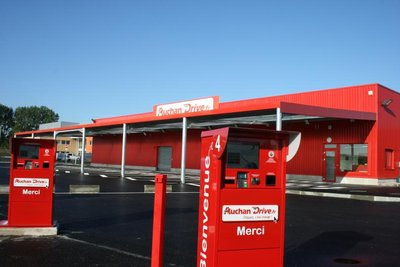
Auchan, through its Chronodrive banner, has revolutionized to me the online grocery business by creating the drive thru supermarket. In France this new retail channel has sprung up, and will count for 6 billion euros at the end of 2014.

The main goal now of these companies is to grow the penetration rate (15% of the French population has used a drive thru at least once this year), but also to generate more uses. 

Auchan is hence testing a connected object, named Hiku, to generate more usage of its drives. It is tested on 100 of its top users, since the beginning of July. The object has been designed in order to manage the shopping list of the whole familly, either by scanning bar codes, or by voice orders. Hiku obviously creates a real added value to the users, and has a real marketing purpose: to ease the order process.

I believe that Hiku is going to become a real tool that will change the way we grocery shop.


Monday, August 11, 2014

What Is Wrong With #India for the #retailers? #Carrefour leaving the county

India represents one of the highest growth potential for retailers in the world, and so for the longest time. Its 1.2 billion people population and its rising economy represents for sure a high potential. Especially while Brazil and China has already been colonized for the longest times by global retailers such as Carrefour, Casino, or Walmart. 

But the expansion in China and Brazil has been achieved while ago, and both legislation and poor transportation infrastructure has made it nearly impossible for retailers to grow. After two tries, Group Carrefour, the largest retailer in the world outside its local market, has decided to abandon its activities

Here is why:
The Indian government opened up the country's $500 billion retail sector to foreign supermarket operators in 2012, but mandatory local sourcing requirements and a decision to let individual Indian states decide whether to allow global chains have deterred new entrants.
Only British supermarket operator Tesco Plc has so far announced plans to set up stores in India.
The new Indian government under Prime Minister Narendra Modi, elected in May, has also opposed foreign investment in the supermarket sector, fearing it will hurt small shopkeepers.
"The barriers were laid down by the previous government and the new government only made it worse by opposing the policy," said Devangshu Dutta, chief executive of retail consultancy Third Eyesight.
"So companies who do not want to lose money in the market have been left with very little choice but to either hold back or fold up," he said.
The world's largest retailer Wal-Mart Stores Inc last year called off its Indian partnership and shelved a plan to open retail stores. The company is now focusing on opening wholesale stores in the country and recently launched an e-commerce venture in India.
But I believe India really need retailer in order to boost its demand and its economy. Hence, retailers will allow the country to grow its purchasing power, and its ability to afford a better lifestyle, which could boost the sales of other international suppliers such as P&G, Nestlé, or Mondelez. 
Obviously, India wants to keep control over this important market in order to allow an Indian retailer to keep a competitive place prior to the arrival of retail tycoons. The only issue is that these delays really impact the economy of India, which growths is lowering faster than its Chinese and Brazilian competitors. I don't believe anyway that a local operator may be able to grow enough to assure a high retailing service in such a large country. The expertise of international leaders is required to do so.
The time to market has not arrived yet, and some companies are still looming on the market. But for how long?

Sunday, August 10, 2014

When Will We Have Quality Smartphone With Keyboard back?

I have posted several posts about this topic, and my struggle to find a good smartphone now that my last Blackberry bold has fallen apart. 
I own now a Samsung Android Galaxy Ace Smartphone. I was actually quite happy at some point to leave Blackberry, because over the years, I must admit the lack of applications has been a real bargain. I now have access to a lot of cool applications which really help, no questions. I also like the size of the screen, which allows to consult the web and videos very easilly.

But as you may know, I consider a smartphone as a business tool, in order to get organized, but also to "create". By creating, I mean editing text, writting reports or blog posts on the go. Something that I find nearly impossible to make with a tactile screen, wether it is a Samsung's or an Apple's. 

Don't get me wrong, I believe the whole tactile screen idea is genious. Indeed, it allowed to a massive number of people to access the Internet and all its components in mobile activities. It has really and deeply change the world. 

But I still believe there must be a lot of people like I am that would like to have a great keyboard smartphone where they can access applications and all the necessary I was discussing (schedule and task organization software).

Now Blackberry is leaving the smartphone market to focus on network security for businesses. I believe that there must be a place for a premium market to deliver high quality smartphones for executives like I.

Does Anyone know one of those smartphones?

Wednesday, August 06, 2014

Demetir, une solution pour améliorer l'expérience client au téléphone

Je voulais faire un peu de publicité pour un service que je trouve très intéressant, qui m'a été présenté par Benoît Bouffard de la société Demetir.


Ils ont développé en effet un système très intéressant pour gérer la partie "qualification" d'un appel consommateur entrant. Ainsi, au lieu d'entrer dans une fastueuse étape où il faut renseigner tout un tas d'information avant d'avoir un opérateur, cette opération ce fait en amont de l'appel, ce qui permet d'améliorer sensiblement l'expérience consommateur, tout en gardant exactement le même type d'informations.

De même, le système permet de faire du feedback management, en mettant directement à la fin de l'appel un questionnaire en place pour voir la satisfaction de l'appel.

Je pense que le système est ingénieux, et permet de sensiblement améliorer la relation client.

Qu'en pensez-vous?


Monday, August 04, 2014

Should Marketers Trust Their Gut or Data?

I favorited not so long ago a  tweet of RetailWire with this headline. And indeed the question is really good. For the longest time, with the rise of the information technologies, marketers have considered customer data as the Saint Graal of marketing. CRM tools have also thrived on this idea. Information and the new technologies allowing to analyze them provided the certainty to propose the best proposal to customers, and then secure sales growth.

But then, Steve Jobs raised as the marketing guru of its generation. Steve Jobs considered that he should not listened to customers demand for two main reasons:
  • Customers don't really know what they want
  • How could you propose something that stands out of the competition if you base your products on the same info than the other companies own?
And hence, Steve Jobs proposed products that were not expected or asked by customers. And it blowed their mind.

Now, you don't create the Ipad or the Iphone every year. And probably there are those two approaches in marketing:
  • One based on gut, on the ability to think out of the box
  • One based on customer data, in order to respond to the everyday demand.
I believe that Gut and Data are as important. It just depends on the situation. 

Now new technologies, especially neuromarketing, which allows to better understand customers' behaviors, may give better insights and data to make decisions for marketers.

What do you think about it?

Monday, July 28, 2014

Etude sur les webconsommateurs en France et à l'International


Etude PwC web-acheteurs novembre 2013 from PwC France

Une étude trouvée via le site Frenchweb, et réalisée par PWC. L'idée est de faire une étude comparative sur l'achat en ligne en France et à l'étranger, ainsi que son évolution. Ce que l'on peut voir, c'est que l'Ecommerce dans les pays développés tel que la France ou le Royaume Unis devient mature, avec des croissances qui ralentissent très clairement. Aussi, il faut voir que la part du ecommerce dans l'intégralité du commerce est en train de se stabiliser. Aussi, il va falloir trouver de nouvelles manières de chercher de la croissance, notamment via le multi canal.

Une étude très intéressante, qui donnent des données intéressantes sur la physionomie du Ecommerce en France.

Wednesday, July 23, 2014

Will Ibeacon really revolutionize Retail?


Ibeacon is obvisouly one of the hottest hype in the retail world. Indeed, the technology represents a lot of advantages for brick&mortar retailers, which still suffers from the Ecommerce competition:
  • Better shopping experience, by proposing updated and customized informations/promotions along the shopper's way
  • Better understanding on how the shoppers go in store, in order to propose more efficient concepts and merchandizing techniques.
The retailers are hence very interested by this technology, even though this one is pretty new and not yet really exploitable. 
But I believe Ibeacon represents also a threat for customers, which may not be to keen on allowing retailers to follow them while shopping.

Indeed, how could a retailer guarantee that its Ibeacon will not be too intrusive? Do a customer really want to have commercial info all the time while shopping? 
Also another question I have: Can Ibeacon, based on customer's infos, could better serve someone instore, than actually a sales representative? 

What is interesting with I beacon, is that it is to me one of the first push mobile marketing tool, which most of mobile marketing tools so far have been "pull" (an application that the person download and active whenever he wants).

For sure, Ibeacon is going to become one of the main topic of this blog.

Monday, July 21, 2014

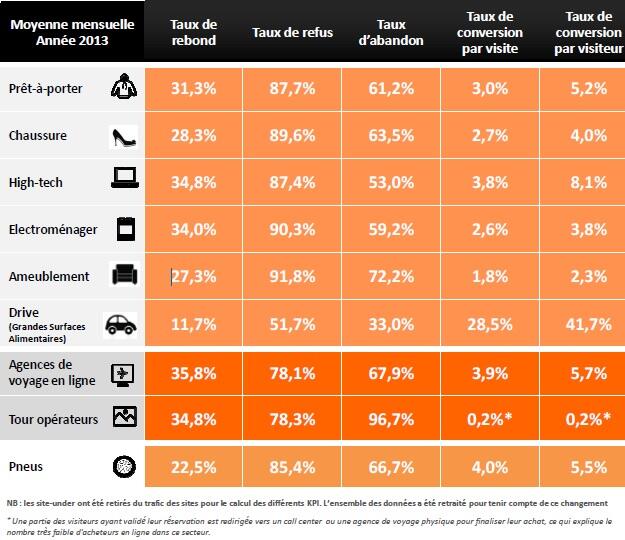
Convertion rates For French E-Commerce


Shared by @marcsimoncini, the conversion rates depending on the industries. You can clearly see that you have very different results depending on the activity. Probably some room for improvements? I believe so, especially for "ameublement" (meaning furnitures).


Sunday, July 20, 2014

Visit Virtually Coles Supermarket In Australia

I wanted to share with you an information I found on the minute retail blog: Australian supermarket chain Coles propose to virtually visit online its new store concept. Actually, I don't think it is the first time that I have seen such an experience. I have already "virtually" visited the new Tesco concept. The interface used is Google maps. You may click here to visit.

First of all, I find the interface very well done. It is easy to hang around the store, and the pics are very neat. You may check out how they merchandise their goods, which is always interesting to do.

Now, I believe it is more a public relation move to publicize Coles, dedicated to retail businessmen, more than aiming a shopper population. Why? Because it doesn't really consist in something that improves the shopping experience. Still, I think this is a great thing to do. How many retailers have been hidden their concepts in order to avoid the competition to compete with them? 

I still remember when I used to be a salesperson at La Fnac, that people were not allowed to take any pics in stores. Same thing when I visited the first time Carrefour Planet, when people told me I should not take any pics as the security staff has been specifically briefed not to let anyone shoot photos.

But in nowadays world, where information is going so fast, it is actually better to let anyone knows what you do good.


Tuesday, July 08, 2014

Offre de stage en alternance #dauvers70

Olivier Dauvers est l'un des plus grands experts de la grande consommation en France. Je lis son blog très régulièrement, et je viens de voir qu'il propose une offre de stage en alternance. 

Je pense que le stage est très intéressant, et je vous recommande de se rapprocher de lui afin de pouvoir postuler.


Monday, June 30, 2014

How US Retailers Adapt Their Strategies To The Growth Of E-Commerce

It has been a while I have read this very good article on the Internetretailer.com website. As you know, I am a fervent supporter of the multichannel approach. This article is great because it shows how well US retailers have adapted their strategy to the growth of ecommerce. First and foremost, which may not be highlighted in the article, US retailers have embraced e-commerce. The largest ones, even though they remain average challenger on the Internet market, have been able to grow their sales and their share of sales on the web those past few years.


As they have kept their store counts steady for most of them, they have searched their growth online. Obviously, as brick and mortar markets are already saturated, the best and most efficient way to grow it to look for online growth.
This fact is clearer on the chart below.


Square feet are shrinking, to be more efficient. Does that mean there are no future for brick and mortar new retail real estate? I don't think so. Obviously, in mature retail business like grocery retailing for example, market saturation will be hard to fight against. But we have seen those past few years new retailer that are working on shopping experience and new ways to approach categories thriving.

What is for sure is that, in mature markets, the Internet is the new playland.


Sunday, June 29, 2014

#Sixt Loyalty Card: Something Is Wrong With Customer Relationship

Couple of weeks ago I went to Sevilla and rented a car there, a small but good Ford Fiesta card. I booked everything on Expedia, which I believe is one of the best service, especially while you try to look to get a plane ticket, a hotel and a car rental at the same time. Then I picked a car rental at Sixt, as it must have been the best deal in terms of prices (I was there for a week end, by myself, did not really need to get a large car to drive couple of miles). Everything did fine, no complain to make, everything was smooth about the rental.


I have been very surprised to find a mail from Sixt couple of days afterward, offering me my loyalty card. 
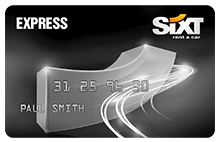
This loyalty card (the same than the one you can see below) offered me different kind of discounts, which I did not really understand how they worked.


The loyalty card looks like a real loyalty card with a magnetic band, like a credit card, with my name on it. The thing that I am bothered about, is that:
  • I have only done business with them once
  • I barely rent cars (If I would be a hard user, maybe they could have given me one, but they would have to know perfectly my profile, which they did not).
I did not sign up for anything, and to give me this card is a little bit ackward. The loyalty card should be asked by the customer, and not forced in the pocket by one company.

I don't think this strategy is well adapted:
  • Giving loyalty card to anybody is kind of embarassing
  • Their loyalty programs, as far as I know, is plain, and I have no intention to use it.
  • I believe that this technique must cost a fortune in mailing and card creations. If they intend to use their customer data base, it must be a complete mess, and not of real value.
I believe that Sixt approach is bad, and that should really not be followed by any kind of business.

What do you think about it?

Sunday, June 22, 2014

Quelques réflexions sur le rachat de DIA par Carrefour

Cela fait un peu plus de 6 mois maintenant que j'ai quitté la société DIA . DIA n'a jamais fait autant la une des magazines que depuis quelques semaines depuis que la maison mère espagnole a décidé de vendre les activités en France. Ce vendredi, nous venons d'apprendre que Carrefour a déposé une offre de 600 millions d'euros pour acquérir l'intégralité de la société DIA France.

Pour ceux qui ne le savent peut être pas, Carrefour possédait la société DIA avant de la céder en 2011 via un Spin Off. Ce Spin Off avait été décidé par l'ancienne direction de Carrefour, Lars Olofsson, avec comme but de revaloriser l'action du groupe Carrefour, qui à l'époque n'allait pas au mieux. L'opération avait bien marché, puisqu'alors que l'action Carrefour continuait de baisser, l'action DIA n'a cessé de grimper, la société espagnole ayant d'excellents résultats en Espagne, ainsi qu'en Amérique Latine.

Aujourd'hui, que va donc faire Carrefour de ces points de ventes? Très clairement, le PDG actuel du groupe Georges Plassat souhaite consolider sa présence en France, en réinvestissant une partie du cash généré par la vente de certains pays (comme la Colombie) dans les activités nationales. Carrefour ainsi acquiert plus de 800 points de vente, ce qui augmente une fois de plus son maillage national.

Mais ce qui va vraiment être intéressant de suivre, c'est de voir ce que Carrefour va faire de ces points de ventes. Voici pour moi la meilleure manière d'intégrer ces points de ventes:
  • Consolider la présence en centre ville: DIA compte plus de 150 points de ventes en centre villes, la plupart à Paris. Carrefour devra très certainement en vendre une partie importante, mais bien évidemment consolidera ses positions en région parisienne, et revendra les points de vente devant être céder à des concurrents n'ayant pas réellement de présence dans la concurrent mais avec des ambitions (Auchan, Intermarché notamment) 
  •  Récupérer une partie des plus grands points de vente pour les transformer en supermarché. Le seul soucis est que les "grands" DIA font entre 800 et 1200 M2, ce qui en font de petits supermarchés, et souvent dans des zones de chalandises peu intéressantes (soit avec un hypermarché pas très loin, soit en bas d'une cité HLM). Il faudra voir comment Carrefour gère ces points de vente.
  • Mais pour moi, l'idée de génie serait de récupérer ces points de vente pour en faire des Drive déporté. En effet, le maillage de DIA dans certaines régions est très bon, la taille des points de vente parfait pour en faire des entrepôts Drive, et en plus, comme je le disais, souvent ces points de vente sont sur des zones de chalandise concurrente de gros supermarché ou d'hypermarché.
Peut être même que Carrefour va développer de nouveaux concept commerciaux pour tirer un maximum de ces points de vente. En tout cas, tout cela va être passionnant à suivre.
  •  
  •